Tag

family support Archives - Healthy Mothers, Healthy Babies: the Montana Coalition

Support from the Start: Tristan, Emberly, and the Power of Home Visiting

By Home Visiting

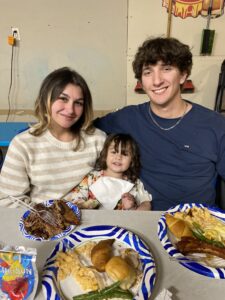
Tristan was 18 years old and 10 weeks pregnant with her daughter, Emberly, when she was first connected with home visiting nurse Hannah Akard through Nurse Family Partnership. Now 21, Tristan speaks on the role Hannah played in her birth journey, and the joys and challenges Hannah has been present for as Emberly, now 2, continues to thrive.

I remember I had gone to see a nurse and they had a little poster by the door for Nurse Family Partnership. I read it while I was waiting on the nurse to come back in, and I was like “maybe I’ll give it some thought.” I was signing up for WIC at the same time too and I was thinking that it seemed like a resource I needed. 

Garett and I got together in our senior year of high school and we’ve been together since – but we were super shocked about the pregnancy. We were so young. I went into it knowing a little bit about babies and birth, but I wanted to be fully informed. I wanted to know everything so no one could say “you don’t know anything –  you’re just 18.” 

We both went to meet up with Hannah for a coffee the first time. Then we started meeting biweekly. I did a lot of my own learning and Hannah helped me with that as well.  Like with what’s changing in my body, what’s going on with the baby, and life after having a baby, and what postpartum depression and anxiety was. 

Garett was there at some of the meetings with Hannah. Sometimes I’d bring material from Hannah home and I reviewed it with him. He was very involved in the birthing plan – he knew all  the stretches to help relieve all the pressure during pregnancy and then also during labor. He was amazing during the whole process.

I had three different birth plans – an A, B, and C. Hannah was just super supportive through it all because I’m very much a natural person. So she really helped me with finding natural remedies. But Hannah and I also talked about how it might not go perfectly. So I went ahead and made B and C plans. But it did honestly, end up being the best birth.  I used aromatherapy and I did a lot of prep before. I stretched and I did these workouts with the yoga ball. 

I delivered naturally. It was 19 hours, with me pushing for less than 30 minutes. They put Emberly on my chest and it was like my whole world shifted. 

The only part that didn’t go to plan was that I didn’t get my “golden hour” that we’d talked about right away. I wasn’t delivering my placenta and then I was losing blood and a doctor had to step in and do what needed to be done. So Garret got her, and he had his skin to skin time with her until I could hold her.

After, I was texting Hannah, sending her pictures of Emberly and filling her in on the birth. Then she got to meet her and see her in her little car seat with her cute outfits and stuff –  it was just so sweet. 

I did fall into postpartum depression and anxiety pretty bad for a little bit. I didn’t want to tell anybody. When I was doing those screenings, I just kept lying on them. I was thinking, “I don’t want anybody to think I’m unfit.”  You know? Just the fear of all that. But then I had this one day –  I don’t remember what happened. I broke down to Garret and I told him everything. He said I  needed to talk to somebody about this. And so I talked to Hannah about it and we got very open and honest and she helped me with all the resources that I needed. Even just being open and talking about what I was feeling helped me.

I’m 21 now, and Emberly is two – she’s very independent. Anything she can do herself or she wants to do herself, she will do. So that’s pretty fun. She is super sweet and well-mannered – that was a big thing for me. She’s very much a daredevil. 

Hannah has been my rock from the beginning. She knew before anyone about the pregnancy, other than Garret and a few key people. So it was really special to be able to show her my baby after everything that we’ve been through. We finally got into our own apartment six months ago and we have just kind of been thriving. 

It has been so amazing as a young parent to have somebody who’s not related to me, to be able to give me reassurance and information. With Hannah, it was always super neutral. It was like, “Here’s information. Take it if you want it – don’t take it, if you don’t want it. No matter what, I’m here for your peace of mind.”

You can use the LIFTS Online Resource Guide to find home visiting programs across Montana—just type “home visiting” into the search feature. If you need help finding a program, you can also call the LIFTS Warmline at (406) 430-9100 for personalized assistance.
‘Let’s Talk About It’: Meredith Lucas on Showing Up for Families

By Home Visiting

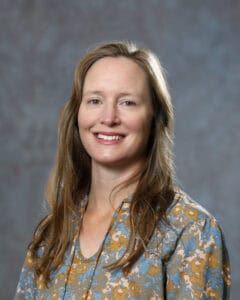
Meredith is a Montana native and lifelong learner – so traveling and experimenting with different professional and personal endeavors has become a passion as she has explored and worked through the United States and South America.  Once an aspiring Spanish professor, now a nurse home visitor for the perinatal population, her curiosity and drive to advocate and inspire positive change in perinatal health care has become a refined focus. When she’s away from work, Meredith can be found with her two children, Buckley and Iris, or navigating the terrain with her dog, Stanley. 
From my perspective, a home visiting program is working to close the gaps and create a judgement-free presence in a way that’s unique to each person. It gives people the space to be who they are.

There are people who have the benefit of having a family or friends that really step up at this time, are there for them and do all the things that need to be done – I think that is wonderful. But I just don’t think that’s the case for the majority of families. So many of us are kind of on our own trying to figure things out, and you take on so much that you shouldn’t have to. Sometimes the difference is just having that support person who says: “Hey, let’s talk about it.” Or “What are you feeling? What do you need?”

Yes, there’s the healthcare aspect to home visiting – supporting people through that is important. But I think we get more of – “I just need somebody here to really be with me at this time in my life.” 

I’m originally from Billings. When I was 18, I moved out to Oregon to go to school and I majored in Spanish. I traveled down to Mexico and South America and was on that path of just working towards becoming a professor in Spanish, but things changed and I ended up moving to Oklahoma and working with non-governmental organizations like Feed the Children and Boys and Girls Club. I had my first child during nursing school and was a night shift nurse while working in research. Then after Covid, I decided I needed to be closer to my home base, and we moved back from Kansas up here to Billings.

I had my second child and had the opportunity to use daycare and switch gears with a day shift job – and that’s how I came into this position as a home visiting nurse. In supporting other parents and mothers who were in the same boat as me, I feel like it was like I was widening my own community. 

I’m the person who can provide advocacy and education and walk alongside new parents. I’m there to ask “How do you envision yourself? What issues have you been dealing with – and how would you like to approach those issues?” They’re doing the hard work – I get to be there to support them when they need me and tell them it’s going to be okay. That we’ll figure it out. 

With the rise in the knowledge and advocacy of perinatal mental health, we’re allowing people to be vulnerable and not carry that weight all themselves. We’re also normalizing not feeling okay during a period of time when you’re told you’re supposed to be having the time of your life, you know? That’s not always the case for people. And if they’ve had a lot of their past, kind of creeping in during parenting – what do you do with all that? 

A lot of people have burdens they’re carrying around, and they need to feel safe. That’s a big one. They have a need to feel like they’re not the only ones that are, say, having a child with developmental delays. They might just need to gain perspective on what’s going on right now.

We remind our clients that if anything, at least they know they have a choice. They can choose to call me – or not. They can see me – or not. And that in itself is an intervention and outcome for a person who may not have had a lot of decision-making opportunities in their life. 

If there’s hesitation, that’s completely okay and normal. I’ve softened my approach a lot since I first started. You don’t need to sign anything or enroll. We can just talk or you can get to know me. Because some people do require a lot more relationship building upfront. It’s just allowing that person to be the decision maker. Maybe in the grand scheme of things, it’s just a little ripple in the pond, you know? But it’s something.

Everyone has an internal dialogue. It’s hard when the internal dialogue is not a positive one. I really like to support people by providing a positive dialogue no matter their situation. Reminding them that there’s still hope and there’s still the ability to change. This is not the end, you know? This is only the beginning.

You can use the LIFTS Online Resource Guide to find home visiting programs across Montana—just type “home visiting” into the search feature. If you need help finding a program, you can also call the LIFTS Warmline at (406) 430-9100 for personalized assistance.

‘You Don’t End Up Here by Accident’: Hannah Akard on Heart, Trust, and Home Visiting

By Home Visiting

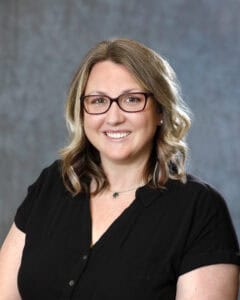
Hannah has been a nurse for almost 17 years and has been a Home Visiting Nurse with Nurse Family Partnership in Billings for three years.

She and her husband have six children – fostering and adoption are part of their story – and Hannah will be the first to tell you that she loves her role as an RN. But even more, she adds, she loves each of the families who have given her the honor of being invited into their stories. 

I always tell people, “you don’t end up in this job by accident.”

Since I was little, I’ve always, always loved moms and babies. I was a missionary kid and I think that’s just part of my DNA –  I knew I wanted to be a nurse since childhood.

When I was in high school, I actually interned with a midwife and I got to follow her on some prenatal appointments and several deliveries. On one of the deliveries she didn’t make it in time. So at 16, I helped the mom deliver and I actually caught the baby. It was life changing. Just a really incredible experience to see what it looks like to support a woman during pregnancy, then during labor and delivery, and postpartum.

From my personal experience, I had my first baby during finals week in between my two years of nursing school and when I graduated, I had a 1-year-old. My husband and I went on to have six kids within eight years – three biological and three adopted. And through that process of fostering especially, I feel like it really gave me a heart for mamas who were struggling and wanted to be moms, but didn’t have support systems in place, or didn’t have people advocating for them, or advocating for their babies.

I actually stepped into home visiting from being a NICU nurse. I’d been a NICU nurse for a long time. I was also a flight nurse for a while – but there was not a good work/life balance. I was like “there has to be a way that I can still take care of mamas and babies and be a good mama myself.” So I legitimately just Googled “Mother/ Baby, Nurse”- and this position popped up.

I get the privilege of being there through pregnancy, which is such a pivotal time for a mom – and then through the first two years of baby’s life, which is so foundational. This has been such a gift to me, because that is something I didn’t get in the NICU.

There are so many joys and heartaches we are invited to share in. Sometimes a client’s mom – maybe they don’t have that relationship. Or they’re estranged or, you know, her mom isn’t alive anymore. They need somebody who can rejoice with them. Who can sit in the pain with them. Just continue to walk every step of these critical first few years with them. Consistency is huge. For some moms, we are the longest and most consistent relationship they have ever had. You really, really do give these families your heart. We pour our blood, sweat, and tears when walking through the hardest of times with them, which is such an honor.

I had an experience with a mama where I went to the first postpartum visit and I walked in the door and she was holding her baby. And I was just like, “Oh my gosh, she’s beautiful.” And she was like, “I want you to hold her – I want you to be the first to hold her.” And I just …  it wrecked me. 

We really work hard to try to collaborate. And that collaboration really looks like bringing in the right people. Sometimes these are connections for behavioral/mental health or housing. One of the first things we ask moms is, “Do you have Medicaid?” “Are you connected with WIC?” “What’s your living situation?” We can’t really go further until those necessities, those high needs are met. Nothing else really matters. Those are the priorities, you know, the focus initially when we start meeting with mamas. 

I do feel like the acuity of the situations that our mamas are in, just in the three years I have been here, has significantly increased. When I first started, we maybe had a mama whose main need was finishing high school. Or they needed housing or resources as far as, you know, just making the paycheck go through the rest of the month. Sometimes it was a relational issue.

But now I feel like with so many of our mamas that we’re working with, there’s mental health issues. There’s substance use issues. There’s intimate partner issues. There’s legal issues. Housing, I feel like, has been a constant the whole time I’ve been here. There’s just more acuity and complexity now.

Ultimately, it’s really trying to just meet them where they’re at and finding out what their priorities are. And remembering that their priorities may not be my priorities. So how can I support what is important to you?

 The beautiful thing about Nurse Family Partnership is that this is evidence-based. The numbers really show the return on the investment. And yes, there’s the financial part of the investment, but it’s also the return on the investment of relationships. Of time spent with that person and the trust that is built. Home visiting is very valuable for our community because we have our eyes on the most vulnerable.

It’s breaking down walls where racism, economic status, and past experiences of judgment have created barriers. Home visiting nurses have the opportunity to get past all of that.

For me, visiting with mamas during pregnancy and continuing to care for them and their family until the baby turns two – that’s more than a two and a half year relationship.  I don’t know any other area of nursing that I would get that opportunity to really be a part of a family’s story –  just like each of them are a part of my story.

You can use the LIFTS Online Resource Guide to find home visiting programs across Montana—just type “home visiting” into the search feature. If you need help finding a program, you can also call the LIFTS Warmline at (406) 430-9100 for personalized assistance.

EARLY CHILDHOOD SUMMIT 2026

By

Join us as we celebrate NAEYC Week of the Young Child and Strengthening Families Month this April! The Early Childhood Summit brings together child care providers, educators, business leaders, and parent advocates to connect, learn, and collaborate to strengthen early learning opportunities and support the early childhood workforce in our community.


Birth to Five Launch Labs: Engaging families as true partners in system design and decision-making

By

With the release of the Bright Futures reports, Montana has a compressive road map for strengthening early childhood systems. In response, the Montana Early Childhood Network is hosting a series of “Launch Labs” to bring partners together from across the state to work on each of the five priority areas of the strategic plan to help turn these reports into action.

May 27, 2026 01:00 PM

Register here!

Birth to Five Launch Labs: Establishing sustainable governance to ensure alignment, accountability, and tribal consultation

By

With the release of the Bright Futures reports, Montana has a compressive road map for strengthening early childhood systems. In response, the Montana Early Childhood Network is hosting a series of “Launch Labs” to bring partners together from across the state to work on each of the five priority areas of the strategic plan to help turn these reports into action.

Apr 22, 2026 01:00 PM

Register here!

Birth to Five Launch Labs: Improving coordination and navigation across programs and sectors

By

With the release of the Bright Futures reports, Montana has a compressive road map for strengthening early childhood systems. In response, the Montana Early Childhood Network is hosting a series of “Launch Labs” to bring partners together from across the state to work on each of the five priority areas of the strategic plan to help turn these reports into action.

Mar 25, 2026 01:00 PM

Register here!

LIFTS Out Loud: Ryan’s Journey Home

By Caregiving, Community Support, Dads, Early Childhood, Parenting

By Callie Triller & Jake Maher

This story appears in the 5th Annual LIFTS Magazine, where Montana parents share honest experiences about connection, resilience, and the journey through early parenthood.

By Jake:

Before my son Ryan was born, my life was spiraling out of control. I wasn’t a productive member of society, and was just lost. I was in jail when I discovered I’d become a dad, and Ryan’s mother and I were no longer together.

I eventually got into the drug court program, and went to treatment, and that’s when Callie and her family got involved as foster parents.

I started doing weekly video calls with them, which Child Protective Services (CPS) encouraged. Callie sent me a notebook and a pen, and said if you want to write a letter to Ryan, we’ll read it to him, so I did. She and her family were so supportive of me. They sent care packages while I was in treatment, they sent pictures and a photo album, and wrote to me about what it had been like since the day they got him. They saw me as a person who was struggling and needed a lot of extra encouragement, and were always helping work towards the goal of reunification. When I got back from treatment, Callie would drive Ryan to me for my supervised visits, twice a week for an hour each.

I took parenting classes, got enrolled in an intensive outpatient program, and went to 12-step meetings. Ryan was the reason I didn’t give up. I didn’t really look at that as an option at that point. I just wanted to be with him.

When he finally came to live with me, I continued these efforts, attending recovery meetings and taking every parenting class that I could. I wasn’t court-ordered to do these things, but felt it was necessary to keep me on the path that I was on. I wanted to take full advantage of every opportunity I could that would give me greater chances of having Ryan permanently. I’ve learned that the more you put into something, the more you get out of it. That’s why I went all out, and did everything I possibly could to better my chances of getting him back. I work full-time, Monday through Friday, and Ryan goes to daycare. He’s just started walking, and has been communicating more. It’s not so much like a guessing game anymore – he can actually let me know what he wants. The communication between the two of us, growing together, and having the bond that we do is a huge win.

Eighteen months ago, I never would’ve thought that I’d be where I am today.

By Callie:

When we started fostering, we knew we would need every resource at our disposal. With every placement, it held true – we needed friends, babysitters, doctors, and community to support us so we could love and support each child who walked in our doors. Baby Ryan was no exception. He came to us straight from the NICU after a pre-term birth, and we immediately enlisted as many friends as we could to take turns holding and rocking him, knowing he needed all the love we could provide.

As a child in Montana’s foster care system, Ryan qualified for many public benefits, including Medicaid, WIC, and the Best Beginnings Scholarship. Through Medicaid, we were able to quickly connect with an occupational therapist familiar with feeding premature infants. She educated us on proper bottle placement and techniques to allow him to drink as much formula as he could so that he would grow stronger. His occupational therapist also worked to provide him positive sensory touch, and coach us on how to best care for him as his body and brain developed outside of the womb.

Medicaid also paid for all of his well-child check-ups. Over the course of the year that Ryan lived with us, his primary care provider helped us navigate some difficult illnesses and directed us to the proper treatments when there were milestones he was slow to meet.

We connected Ryan with the WIC program, which paid for most of his formula throughout the first year, helped track his growth and development, and provided us with nutrition support as Ryan transitioned to solid foods.

Once Ryan worked his way into a more routine schedule and got bigger and stronger, we enrolled him at a high-quality early childhood program in our community, utilizing the Best Beginnings Scholarship, a state-funded program that helps families cover the costs of childcare.

We had no idea that one of the coolest parts of fostering Ryan would be getting to know his biological parent. I remember learning that Jake had chosen to go to treatment and I literally cheered! When he asked to do Zoom visits through treatment, we were so happy to help make that happen. As soon as possible, we wanted Ryan to know his dad, and for Jake to be continually motivated by all the sweet coo’s and big brown eyes Ryan could give.

After Jake finished treatment, and in-person visits started, we got to know him even better – seeing him at least once per week. We were inspired by his hard work and dedication to both his sobriety and his parenting. He was utilizing every resource he could for himself, just as we were utilizing every resource we could to support Ryan.

As visits progressed from “supervised” to “monitored”, and then from a day at a time to overnight, we got to witness Jake and Ryan’s bond flourish until our very final handoff. I was tearful, as I knew I was saying goodbye to the sweet little boy who had lived with us for the past 15 months. But Ryan crawled right over to Jake who picked him up. He then looked at me with a big smile and just waved. He knew he was home.


Professional photos by Highland Creative Solutions.


Visit hmhb-lifts.org for local resources using the search terms “Family Support & Education”, “Substance Use Disorder Treatment Providers”, and “Birthing & Parenting Classes”.


Finding Strength Through Motherhood, Loss, and Healing: A Story from Chile to Montana

By Maternal Mental Health

Guest post by Catalina Geyger

Growing Up in Emotion and Resilience

I grew up watching my mom ride the highs and lows of her emotions. From a young age, I knew sadness and tears. Born and raised in Santiago, Chile, I took medication and did therapy through high school just to survive the day and ride horses after. That world kept me sane.

My mom died of colon cancer when I was 23, and I was devastated. It pushed me to leave the country, travel, and work with horses. On one trip, I visited my aunt in Montana and met my husband while helping at a remote bar. I never imagined marrying him and living here. When my grandpa met Reed, he said he was a good man—that stuck with me. We married and got a horse thanks to my father-in-law, who drove six hours so I could see one. I felt at home.

I know myself enough now to do things for me, whether going to a city for my nails or riding for a while. But admitting that need isn’t always easy. I’ve always been honest with Reed about my feelings, thoughts, and crazy ideas, and even when he doesn’t understand, he lets me be.

My First Birth and Postpartum Experience

When our first son was born, I experienced it all—baby blues, excitement, nervousness, sadness, fear. It was winter, during COVID, the baby was tiny, jaundiced, and breastfeeding struggled. Reed went out to feed cows every day, and the four walls felt tight. I needed help. After a couple fights, I admitted my jealousy that he could leave while I couldn’t. Then my father-in-law started taking the baby and me to see the horses nearly every day. I also asked my doctor for my “happy pills,” which help me be happier.

Before our second child, I was off medication but knew I’d restart afterward. Breastfeeding didn’t last long, and formula worked best. I kept taking medication, adjusting doses until I found what worked. Seeing myself more at peace, I now tell pregnant friends it’s okay to take medication—it doesn’t mean forever, and that’s fine too.

Seeking Therapy and Real Support

When our third child was born, I needed more than medication. I drove an hour to the city twice a week for therapy sessions, and it was life-changing. Even surrounded by loving people, you can feel alone, and having non-judgmental support made all the difference.

I am lucky—not just for my family, home, and raising my kids, but because Reed’s family hugs me like my mom did, listens to my ideas, and loves me through highs and lows. Losing my mom taught me life is short. I believe she moved things so I could meet Reed, wake up to mountains and cows, and build this life. I am grateful every day.

Maternity leave in the U.S. is hard—you work like you have no kids and raise kids like you don’t work. Not all jobs offer more than four to six weeks, so you have to be lucky. I wish more people knew they could ask for help and use resources, even when money is tight. Small steps to care for yourself make each day easier.

Finding Light in Hard Seasons

Winter is still hard—cold, isolating—but a sunny day can lift everything. Even through sadness, fear, or exhaustion, joy, connection, and gratitude are possible. That’s what keeps me going.


Versión en Español

Crecí Entre Emociones y Fortaleza

Crecí viendo a mi mamá subir y bajar con sus emociones. Desde pequeña conocía la tristeza y las lágrimas. Nací y crecí en Santiago, Chile, y durante toda la enseñanza media tomé medicación e hice terapia solo para sobrevivir el día y montar a caballo después. Ese mundo me mantenía cuerda.

Mi mamá murió de cáncer de colon cuando tenía 23 años y me devastó. Eso me impulsó a salir del país, viajar y trabajar con caballos. En un viaje, visité a mi tía en Montana y conocí a mi esposo mientras ayudaba en un bar en medio de la nada. Nunca imaginé casarme con él y vivir aquí. Cuando mi abuelo conoció a Reed, dijo que era un buen hombre; eso se me quedó grabado. Nos casamos y conseguimos un caballo gracias a mi suegro, que manejó seis horas para que pudiera verlo. Me sentí en casa.

Ahora me conozco lo suficiente para hacer cosas para mí, ya sea ir a la ciudad a hacerme las uñas o montar un rato. Pero admitir esa necesidad no siempre es fácil. Siempre he sido honesta con Reed sobre mis sentimientos, pensamientos e ideas locas, y aunque a veces no entienda, me deja ser.

Mi Primer Parto y el Posparto

Cuando nació nuestro primer hijo, pasé por todo: tristeza posparto, emoción, nervios, pena y miedo. Era invierno, en plena COVID, el bebé era pequeño, tenía ictericia y la lactancia no funcionaba bien. Reed salía todos los días a alimentar las vacas y esas cuatro paredes se sentían pequeñas. Necesitaba ayuda. Tras un par de discusiones, le confesé que sentía celos de que él pudiera salir y yo no. Entonces, mi suegro empezó a llevarnos al bebé y a mí a ver los caballos casi todos los días. También pedí a mi doctora mis “pastillas felices,” que me ayudan a estar mejor.

Antes de nuestro segundo hijo, había dejado la medicación, pero sabía que la retomaría después del parto. Intenté amamantar otra vez, pero la fórmula funcionó mejor. Seguí tomando medicación, ajustando dosis hasta encontrar lo que me funcionaba. Al sentirme más en paz, ahora les digo a amigas embarazadas que está bien tomar medicación; no significa para siempre, y también está bien si lo es.

Terapia y Apoyo Real

Cuando nació nuestro tercer hijo, necesitaba más que medicación. Conduje una hora a la ciudad dos veces por semana para terapia, y fue transformador. Aunque estés rodeada de personas increíbles, puedes sentirte sola, y ese apoyo sin juicio marcó la diferencia.

Soy afortunada, no solo por mi familia, nuestro hogar y criar a mis hijos, sino porque la familia de Reed me abraza como lo hacía mi mamá, escucha mis ideas y me quiere en los altos y bajos. Perder a mi mamá me enseñó que la vida es corta. Creo que ella movió las cosas para que conociera a Reed, despertara con montañas y vacas, y pudiera construir esta vida. Estoy agradecida todos los días.

La licencia de maternidad en EE. UU. es difícil: trabajas como si no tuvieras hijos y crías a tus hijos como si no trabajaras. No todos los trabajos dan más de cuatro a seis semanas, así que hay que tener suerte. Ojalá más personas supieran que pueden pedir ayuda y usar recursos, aunque el dinero sea poco. Pequeños pasos para cuidarse hacen los días más llevaderos.

Encontrar Luz en las Temporadas Difíciles

El invierno sigue siendo duro, frío y aislante, pero un día soleado puede levantar todo. Incluso con tristeza, miedo o cansancio, es posible encontrar alegría, conexión y gratitud. Eso es lo que me mantiene adelante.

Professional photos by M.Kaye Photos.

If Catalina’s story resonates with you, remember: you don’t have to navigate parenthood alone. LIFTS offers a free, statewide resource guide connecting Montana families to mental health supports, parenting programs, and community resources. Explore local help, practical tools, and more at hmhb-lifts.org — because even small steps toward support can make a big difference.

Mother Love is Now the LIFTS Podcast!

By Uncategorized

By Emily Freeman, Podcast Host and HMHB Storytelling Coordinator

New Season, New Name! 

For the past five years, the Mother Love Podcast has been sharing stories of parenting and caregiving in Montana, illuminating the challenges and triumphs of the 0-3 years. In conversation with providers, families, advocates, and more, our podcast aims to illuminate both the challenges and celebrations of pregnancy and parenting, and to provide a space to learn, listen, and uplift Montanans across our vast state. 

Starting this fall, Mother Love is getting a new name: the LIFTS Podcast. You can expect the same great content, but with a show title that fits neatly in line with some of other other projects: the LIFTS online resource guide, and LIFTS magazine. LIFTS stands for Linking Infants and Families to Supports, and it’s one of the things that we do best at HMHB. Additionally, we wanted the name of the podcast to acknowledge the full range of people who support and navigate the perinatal journey: including dads, grandparents, foster parents, and more. 

Exciting Episodes and Voices Coming Your Way

While our name is new, our mission hasn’t changed: to share honest conversations, highlight voices of lived experience, and bring attention to perinatal mental health and family well-being in Montana. We invite you to follow along as we launch new episodes starting in October, featuring a variety of voices and perspectives from around the state. In conversation with Maureen Ward of DPHHS, and Tracie Kiesel from Buckle Up Montana, we’ll learn about Montana’s new carseat law, which brings our state in line with federal safety guidelines. We’ll chat with Suzanne Bendick, of Roots Family Collaborative, about the power of live storytelling to provide a space for connection and healing. And we’ll hear from Mindy Petranek, one of the writers featured in our 2025 LIFTS magazine, about the process of sharing her experience on the page. 

Tune In and Join the Conversation

We hope you’ll tune in and join us for the upcoming season of The Lifts Podcast, which you can find on our website, Spotify, or Apple Podcasts. And if you’ve got a great idea for a guest, let us know! You’re welcome to email us at stories@hmhb-mt.org.