A Trusted Presence: Selene’s Experience with Home Visiting

By Home Visiting

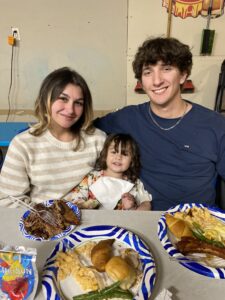
Selene heard about Nurse Family Partnerships through WIC when she was four months pregnant – her daughter, Delia, is now six months old. Selene continues to meet with registered nurse Meredith Lucas, who has become a trusted confidante for more than a year.

 At the very first visit, I thought, “I don’t know if I want to continue this.” But the more I got to know Meredith, the easier it became. I was able to open up to her. She told me a lot about programs I could look into. And she was always giving me information with each monthly milestone for the baby. Whatever I needed. 

Now, I don’t like missing our appointments –  I think I’ve only ever missed maybe one of them. My mom actually passed away some years ago, so it’s good to talk to Meredith and ask questions about Delia’s age, milestones, and what I should be teaching her. 

Before I gave birth we went over one of those birth plan forms to take to the hospital – what kind of music I wanted, how I felt about interventions, etc.  Meredith knew that giving birth without my mom was something I struggled with. So as part of my birth plan, she suggested I bring a photo of my mom to the hospital with me. I did that and it was really soothing for me.

I did want to have a natural birth with no medications and I tried for this through the whole pregnancy. When I went to the hospital, my fiance, Monty, was there with me the whole time. He was the one playing the music, trying to help me feel more comfortable. I was in labor for 26 hours and I was given an ultimatum to take the epidural or have a C-section, which I chose to have the epidural. There were some decisions about medications I was advised on after this that didn’t work out and actually seemed to make things worse. That was really frustrating since I was doing my best to follow the doctor’s advice. But when I trusted my instincts on a medication they recommended, and said no to this, it ended up being the right call and things were regulated. You hear that message that “you are the one who knows your body the best.” That can be a risky statement at the moment. But it was awesome because that was the right move – that made me feel like I got some power back. Also, it gave me a perspective on that really helpless feeling your partner can have in that room. 

 Monty did the cord cutting and when Delia came out, she looked right at him, which the doctors said was surprising. I guess they usually don’t really acknowledge dad. They just want mom. But Delia looked directly at him – it was beautiful. 

When I started meeting with Meredith again, I think the main thing I was wanting to know was if things would ever be regulated with Delia. Everything just seemed so all over the place when they’re newborns. But I think it was more like the comfort of having Meredith there, more than anything, both before and after I gave birth. She had insights about postpartum stress and had a list of therapists if I wanted to connect. Meredith helped me get in touch with a doula for placenta encapsulation, then she helped with breastfeeding and also helped me get signed up for Medicaid. She’s been able to come to the house a few times and to do weight checks for the baby when I’ve been feeling like I need to know exactly what she’s weighing. She was a huge help every step of the way.

Delia is now six months old, and it’s been more than a year since I’ve been meeting with Meredith.

We’ve mostly met at little coffee shops in the morning and that’s been a comfortable setting. And then sometimes here and there she’ll come to the house and see the baby – it really just depends. She just goes where I feel like I want to go. 

In the beginning  I felt like visits were going to be a place where they judge you or report things back – whatever bad things they can get out of you or point out things you’re not doing right. I thought that this was just going to be a negative thing. Although it turned out to bring out the best in me. Meredith would highlight everything I was doing wonderfully as a new mother. The more I just kind of kept going with it, the more I ended up finding out about Meredith as well. I was able to open up to her and trust her.  

If anyone asked me, I’d tell them that home visiting programs are a huge advantage for moms – during pregnancy, but especially postpartum. I really, truly think this has been such a blessing for us – I will always recommend it highly for support in all areas.

You can use the LIFTS Online Resource Guide to find home visiting programs across Montana—just type “home visiting” into the search feature. If you need help finding a program, you can also call the LIFTS Warmline at (406) 430-9100 for personalized assistance.

Support from the Start: Tristan, Emberly, and the Power of Home Visiting

By Home Visiting

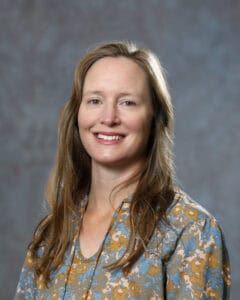
Tristan was 18 years old and 10 weeks pregnant with her daughter, Emberly, when she was first connected with home visiting nurse Hannah Akard through Nurse Family Partnership. Now 21, Tristan speaks on the role Hannah played in her birth journey, and the joys and challenges Hannah has been present for as Emberly, now 2, continues to thrive.

I remember I had gone to see a nurse and they had a little poster by the door for Nurse Family Partnership. I read it while I was waiting on the nurse to come back in, and I was like “maybe I’ll give it some thought.” I was signing up for WIC at the same time too and I was thinking that it seemed like a resource I needed. 

Garett and I got together in our senior year of high school and we’ve been together since – but we were super shocked about the pregnancy. We were so young. I went into it knowing a little bit about babies and birth, but I wanted to be fully informed. I wanted to know everything so no one could say “you don’t know anything –  you’re just 18.” 

We both went to meet up with Hannah for a coffee the first time. Then we started meeting biweekly. I did a lot of my own learning and Hannah helped me with that as well.  Like with what’s changing in my body, what’s going on with the baby, and life after having a baby, and what postpartum depression and anxiety was. 

Garett was there at some of the meetings with Hannah. Sometimes I’d bring material from Hannah home and I reviewed it with him. He was very involved in the birthing plan – he knew all  the stretches to help relieve all the pressure during pregnancy and then also during labor. He was amazing during the whole process.

I had three different birth plans – an A, B, and C. Hannah was just super supportive through it all because I’m very much a natural person. So she really helped me with finding natural remedies. But Hannah and I also talked about how it might not go perfectly. So I went ahead and made B and C plans. But it did honestly, end up being the best birth.  I used aromatherapy and I did a lot of prep before. I stretched and I did these workouts with the yoga ball. 

I delivered naturally. It was 19 hours, with me pushing for less than 30 minutes. They put Emberly on my chest and it was like my whole world shifted. 

The only part that didn’t go to plan was that I didn’t get my “golden hour” that we’d talked about right away. I wasn’t delivering my placenta and then I was losing blood and a doctor had to step in and do what needed to be done. So Garret got her, and he had his skin to skin time with her until I could hold her.

After, I was texting Hannah, sending her pictures of Emberly and filling her in on the birth. Then she got to meet her and see her in her little car seat with her cute outfits and stuff –  it was just so sweet. 

I did fall into postpartum depression and anxiety pretty bad for a little bit. I didn’t want to tell anybody. When I was doing those screenings, I just kept lying on them. I was thinking, “I don’t want anybody to think I’m unfit.”  You know? Just the fear of all that. But then I had this one day –  I don’t remember what happened. I broke down to Garret and I told him everything. He said I  needed to talk to somebody about this. And so I talked to Hannah about it and we got very open and honest and she helped me with all the resources that I needed. Even just being open and talking about what I was feeling helped me.

I’m 21 now, and Emberly is two – she’s very independent. Anything she can do herself or she wants to do herself, she will do. So that’s pretty fun. She is super sweet and well-mannered – that was a big thing for me. She’s very much a daredevil. 

Hannah has been my rock from the beginning. She knew before anyone about the pregnancy, other than Garret and a few key people. So it was really special to be able to show her my baby after everything that we’ve been through. We finally got into our own apartment six months ago and we have just kind of been thriving. 

It has been so amazing as a young parent to have somebody who’s not related to me, to be able to give me reassurance and information. With Hannah, it was always super neutral. It was like, “Here’s information. Take it if you want it – don’t take it, if you don’t want it. No matter what, I’m here for your peace of mind.”

You can use the LIFTS Online Resource Guide to find home visiting programs across Montana—just type “home visiting” into the search feature. If you need help finding a program, you can also call the LIFTS Warmline at (406) 430-9100 for personalized assistance.

‘Let’s Talk About It’: Meredith Lucas on Showing Up for Families

By Home Visiting

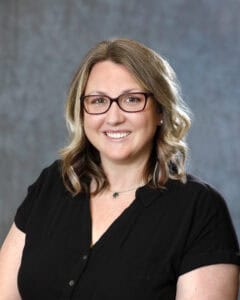
Meredith is a Montana native and lifelong learner – so traveling and experimenting with different professional and personal endeavors has become a passion as she has explored and worked through the United States and South America.  Once an aspiring Spanish professor, now a nurse home visitor for the perinatal population, her curiosity and drive to advocate and inspire positive change in perinatal health care has become a refined focus. When she’s away from work, Meredith can be found with her two children, Buckley and Iris, or navigating the terrain with her dog, Stanley. 

From my perspective, a home visiting program is working to close the gaps and create a judgement-free presence in a way that’s unique to each person. It gives people the space to be who they are.

There are people who have the benefit of having a family or friends that really step up at this time, are there for them and do all the things that need to be done – I think that is wonderful. But I just don’t think that’s the case for the majority of families. So many of us are kind of on our own trying to figure things out, and you take on so much that you shouldn’t have to. Sometimes the difference is just having that support person who says: “Hey, let’s talk about it.” Or “What are you feeling? What do you need?”

Yes, there’s the healthcare aspect to home visiting – supporting people through that is important. But I think we get more of – “I just need somebody here to really be with me at this time in my life.” 

I’m originally from Billings. When I was 18, I moved out to Oregon to go to school and I majored in Spanish. I traveled down to Mexico and South America and was on that path of just working towards becoming a professor in Spanish, but things changed and I ended up moving to Oklahoma and working with non-governmental organizations like Feed the Children and Boys and Girls Club. I had my first child during nursing school and was a night shift nurse while working in research. Then after Covid, I decided I needed to be closer to my home base, and we moved back from Kansas up here to Billings.

I had my second child and had the opportunity to use daycare and switch gears with a day shift job – and that’s how I came into this position as a home visiting nurse. In supporting other parents and mothers who were in the same boat as me, I feel like it was like I was widening my own community. 

I’m the person who can provide advocacy and education and walk alongside new parents. I’m there to ask “How do you envision yourself? What issues have you been dealing with – and how would you like to approach those issues?” They’re doing the hard work – I get to be there to support them when they need me and tell them it’s going to be okay. That we’ll figure it out. 

With the rise in the knowledge and advocacy of perinatal mental health, we’re allowing people to be vulnerable and not carry that weight all themselves. We’re also normalizing not feeling okay during a period of time when you’re told you’re supposed to be having the time of your life, you know? That’s not always the case for people. And if they’ve had a lot of their past, kind of creeping in during parenting – what do you do with all that? 

A lot of people have burdens they’re carrying around, and they need to feel safe. That’s a big one. They have a need to feel like they’re not the only ones that are, say, having a child with developmental delays. They might just need to gain perspective on what’s going on right now.

We remind our clients that if anything, at least they know they have a choice. They can choose to call me – or not. They can see me – or not. And that in itself is an intervention and outcome for a person who may not have had a lot of decision-making opportunities in their life. 

If there’s hesitation, that’s completely okay and normal. I’ve softened my approach a lot since I first started. You don’t need to sign anything or enroll. We can just talk or you can get to know me. Because some people do require a lot more relationship building upfront. It’s just allowing that person to be the decision maker. Maybe in the grand scheme of things, it’s just a little ripple in the pond, you know? But it’s something.

Everyone has an internal dialogue. It’s hard when the internal dialogue is not a positive one. I really like to support people by providing a positive dialogue no matter their situation. Reminding them that there’s still hope and there’s still the ability to change. This is not the end, you know? This is only the beginning.

You can use the LIFTS Online Resource Guide to find home visiting programs across Montana—just type “home visiting” into the search feature. If you need help finding a program, you can also call the LIFTS Warmline at (406) 430-9100 for personalized assistance.

‘You Don’t End Up Here by Accident’: Hannah Akard on Heart, Trust, and Home Visiting

By Home Visiting

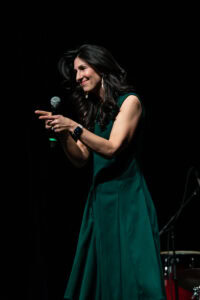
Hannah has been a nurse for almost 17 years and has been a Home Visiting Nurse with Nurse Family Partnership in Billings for three years.

She and her husband have six children – fostering and adoption are part of their story – and Hannah will be the first to tell you that she loves her role as an RN. But even more, she adds, she loves each of the families who have given her the honor of being invited into their stories. 

I always tell people, “you don’t end up in this job by accident.”

Since I was little, I’ve always, always loved moms and babies. I was a missionary kid and I think that’s just part of my DNA –  I knew I wanted to be a nurse since childhood.

When I was in high school, I actually interned with a midwife and I got to follow her on some prenatal appointments and several deliveries. On one of the deliveries she didn’t make it in time. So at 16, I helped the mom deliver and I actually caught the baby. It was life changing. Just a really incredible experience to see what it looks like to support a woman during pregnancy, then during labor and delivery, and postpartum.

From my personal experience, I had my first baby during finals week in between my two years of nursing school and when I graduated, I had a 1-year-old. My husband and I went on to have six kids within eight years – three biological and three adopted. And through that process of fostering especially, I feel like it really gave me a heart for mamas who were struggling and wanted to be moms, but didn’t have support systems in place, or didn’t have people advocating for them, or advocating for their babies.

I actually stepped into home visiting from being a NICU nurse. I’d been a NICU nurse for a long time. I was also a flight nurse for a while – but there was not a good work/life balance. I was like “there has to be a way that I can still take care of mamas and babies and be a good mama myself.” So I legitimately just Googled “Mother/ Baby, Nurse”- and this position popped up.

I get the privilege of being there through pregnancy, which is such a pivotal time for a mom – and then through the first two years of baby’s life, which is so foundational. This has been such a gift to me, because that is something I didn’t get in the NICU.

There are so many joys and heartaches we are invited to share in. Sometimes a client’s mom – maybe they don’t have that relationship. Or they’re estranged or, you know, her mom isn’t alive anymore. They need somebody who can rejoice with them. Who can sit in the pain with them. Just continue to walk every step of these critical first few years with them. Consistency is huge. For some moms, we are the longest and most consistent relationship they have ever had. You really, really do give these families your heart. We pour our blood, sweat, and tears when walking through the hardest of times with them, which is such an honor.

I had an experience with a mama where I went to the first postpartum visit and I walked in the door and she was holding her baby. And I was just like, “Oh my gosh, she’s beautiful.” And she was like, “I want you to hold her – I want you to be the first to hold her.” And I just …  it wrecked me. 

We really work hard to try to collaborate. And that collaboration really looks like bringing in the right people. Sometimes these are connections for behavioral/mental health or housing. One of the first things we ask moms is, “Do you have Medicaid?” “Are you connected with WIC?” “What’s your living situation?” We can’t really go further until those necessities, those high needs are met. Nothing else really matters. Those are the priorities, you know, the focus initially when we start meeting with mamas. 

I do feel like the acuity of the situations that our mamas are in, just in the three years I have been here, has significantly increased. When I first started, we maybe had a mama whose main need was finishing high school. Or they needed housing or resources as far as, you know, just making the paycheck go through the rest of the month. Sometimes it was a relational issue.

But now I feel like with so many of our mamas that we’re working with, there’s mental health issues. There’s substance use issues. There’s intimate partner issues. There’s legal issues. Housing, I feel like, has been a constant the whole time I’ve been here. There’s just more acuity and complexity now.

Ultimately, it’s really trying to just meet them where they’re at and finding out what their priorities are. And remembering that their priorities may not be my priorities. So how can I support what is important to you?

 The beautiful thing about Nurse Family Partnership is that this is evidence-based. The numbers really show the return on the investment. And yes, there’s the financial part of the investment, but it’s also the return on the investment of relationships. Of time spent with that person and the trust that is built. Home visiting is very valuable for our community because we have our eyes on the most vulnerable.

It’s breaking down walls where racism, economic status, and past experiences of judgment have created barriers. Home visiting nurses have the opportunity to get past all of that.

For me, visiting with mamas during pregnancy and continuing to care for them and their family until the baby turns two – that’s more than a two and a half year relationship.  I don’t know any other area of nursing that I would get that opportunity to really be a part of a family’s story –  just like each of them are a part of my story.

You can use the LIFTS Online Resource Guide to find home visiting programs across Montana—just type “home visiting” into the search feature. If you need help finding a program, you can also call the LIFTS Warmline at (406) 430-9100 for personalized assistance.

Strong Families Start Here: Honoring National Home Visiting Week in Montana

By Community Support, Home Visiting

National Home Visiting Week is recognized from April 20–24, 2026.

This nationwide observance celebrates the life-changing impact of home visiting programs and the dedicated people who make this work possible every day. Alongside the Montana Home Visiting Coalition, we’re excited to highlight home visiting in Montana by recognizing families who have benefited from home visiting, as well as the outstanding home visitors serving communities across our state.

We’re grateful for the Governor’s Proclamation celebrating the life-changing impact of National Home Visiting Week  here in Montana and helping showcase the importance of this work across our state.

So, let’s take a moment to hear directly from Montana families about why they said yes to home visiting. Watch their stories in this short video:

Frequently Asked Questions About Home Visiting

Next, let’s walk through some frequently asked questions about home visiting. Many people aren’t quite sure what it is or whether it’s right for them and their families – and that’s okay. Our hope is that this week helps more people understand that no matter where you live, your income, or your circumstances, there may be a home visiting program available to support you.

What is a home visiting program, and how can it benefit my family?
Home visiting is a voluntary, evidence-based support and coaching service that strengthens families during pregnancy and early childhood.

Trained home visitors, such as nurses and early childhood specialists, partner with expecting parents and caregivers of young children to build parenting skills and connect families with services that support healthy physical, social, and emotional child development.

Who can participate in a home visiting program?
Eligibility varies by program, but some are available regardless of income or background.

While access is not yet equal across all areas of Montana, there is ongoing statewide work to expand availability and ensure more families can benefit.

What happens during a home visit?
Each visit is tailored to your family’s needs and goals. Home visitors work with you to build confidence in parenting and support your child’s development.

This might include:

  • Discussing developmental milestones
  • Answering parenting questions
  • Providing lactation support
  • Offering health and safety guidance
  • Connecting you with community resources

What if I’m not able to have someone visit my home or I don’t have a home?
Home visiting programs are designed to be flexible, supportive, and non-intrusive.

If in-home visits aren’t a good fit, many programs offer alternatives such as virtual visits or meeting in community spaces like libraries or coffee shops. You can work with your program coordinator to find an option that feels comfortable for you.

Is there a cost to participate in a home visiting program?
Most home visiting programs are offered at no cost to families. They are typically funded through state or federal programs, nonprofits, or community organizations.

How do I sign up for a home visiting program?
The best way to get started is to connect with a local program near you.

You can use the LIFTS Online Resource Guide to find home visiting programs across Montana—just type “home visiting” into the search feature. If you need help finding a program, you can also call the LIFTS Warmline at (406) 430-9100 for personalized assistance.

So join us this week! Here on the blog and across social media, we’ll be sharing stories from Montana families about why they said yes to home visiting and highlighting the dedicated home visitors who walk alongside them every day.

Follow along! And if you have a story about how home visiting has benefited you and your family, we’d love to hear from you. Reach out to us at stories@hmhb-mt.org.

The Birth of Berry Medicine

By Native American Initiatives, Native Cultural Connections

Berry Medicine Native Birthworks Initiatives – formerly Native American Initiatives with HMHB – launched on April 1, 2026, continuing on as an Indigenous-led nonprofit, with a specific focus on the health and wellbeing of Montana’s Native families. 

This week Berry Medicine Founding Executive Director Dr Amy Stiffarm shares her thoughts with HMHB storytelling coordinator Gwyneth Hyndman on the work that went into this initiative, the story of its namesake, and why Berry Medicine has been a long time coming.
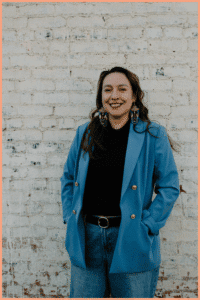
 

Gwyneth Hyndman: Can you talk about the origin of the name Berry Medicine

Dr Amy Stiffarm: I remember being in an early planning meeting and at that time being very linear in my thinking. We were having this great, 3-hour long conversation about what the needs were, and what we could do and what areas we could address and how we could work together. 

Everyone was asking “Well, what are you going to call this?”

I kept coming up with these super long, very logical names involving Native birthworker, or Native maternal health and institute –  to explain what our organization does. And I thought – “You know what? I’m just going to give this a break.”

Fast forward to the 2025 summer. At this point we have consultants and we’ve applied for seed funding and we have people with expertise to help figure out our path forward. And I started reading The Serviceberry by Robin Wall Kimmerer.

 I remember being kind of blown away – just very surprised that what she was talking about was what I had always known as juneberries. 

Kimmerer was describing how these berries come back year after year in June. They’re dependable. You don’t have to tend to them – they’re growing in the wild. Yet everybody has a role – birds come and feast off of the fruit, and then they go and spread the seeds, and then the pollinators come and there is just this beautiful, natural way of supporting one another. 

There’s also the medicinal use of berries in women’s health and pregnancy. Like when we did the Zaagi’idiwin Indigenous doula training from Melissa Sveinson, we made pins out of felt and seed beads in the shape of a strawberry. People who complete the training wear them and it represents birth work. So it just kind of clicked: This is the feeling of the organization that we’re creating.

What we’re bringing to this, and what we’re trying to restore, is that medicine of taking care of one another. Of that kinship and abundance. That there’s enough for everyone. And you know, that could mean anything. That there’s enough health, enough support, there’s enough love. 

I think that’s really decolonizing work. And a big part of what we do is negate the impact of colonialism to restore that support in kinship networks they way they were prior to colonization.


Gwyneth Hyndman: What has the feedback on Berry Medicine been like, even in the last few weeks since this direction was announced?

Dr Amy Stiffarm:  I think people are just like, “Alright, let’s go!” 

You know, I’m really grateful there’s so much trust, which we’ve worked really hard to build, and grow these relationships that we already have. It feels like it’s a lot of the people that we’ve done work with while at HMHB who are already part of our different networks that are sharing and expressing support, congratulations, and gratitude. 

I think for a lot of Native people, it’s having something that is our own. A common theme that I’m hearing is, “We have something for us now.”

Even though HMHB has always been for everyone, I think this is affirming of what we were feeling and what we were seeing a need for: work that would be Indigneous-led and fully focused on Indigenous lives.

So yes, it’s very cool to see so much love. 


Gwyneth Hyndman: Can you just talk a little bit about what Indigenous-led birth work looks like and why that is important in Montana right now?

Dr Amy Stiffarm: With  Indigenous health – when it comes to health promotion or any type of health improvements in Indian country or Tribal communities – Indigenous scholars and people in this field really advocate for Indigenous-led initiatives and solutions based on Indigenous values and culture. I think one reason why we have to be very specific about that, is because it hasn’t been that way for so long.

Part of the build-up towards this moment was that Health Affairs paper that we wrote about, on Tribal engagement and about linking families to supports on the LIFTS online resource guide

In that paper we talked about how so often, and for so long, the way to help Tribal communities has been to take an initiative that works somewhere else, and say, “Okay, here you go – we’re helping.” 

And it’s always been these western models. So, we’re only getting so far – especially when you’re looking at maternal health. 

Maternal health in America, in itself, is not great to say the least, right? And when we’re looking at health outcomes and what’s going on with Native women and birthing people, it’s not good – it’s really bad.

So that is one of the reasons that we need to really think about when we’re approaching communities from the outside and we want to help – and ideally they’re asking for help –  it’s asking, what does helping this community really look like? 

What the trend in research and history has shown is that there’s always been this approach of going to Tribal communities and saying, ‘Okay, here’s what you’re gonna do – alright, bye.’ Or this helicopter research where you come in for a little bit and then you go, and then asking: ‘Well, why aren’t you improving?’ Even the best-intentioned interventions from the best-intentioned people can cause harm and at the very least, be ineffective. One thing we really focused on in our Indigenous health PhD program has been to really challenge and think critically about what is, and what’s not, actually working.

Indigenous people in what is now known as the United States have been through a lot of traumatic experiences, many of which were intentionally implemented through Federal Indian policies that were created with the intent to destroy our kinship networks and our family systems, our culture, our homelands. This has had significant impacts.

But at the end of the day, we’re still here. Our ancestors survived and we’re here today because of some kind of strength. And when we look at what that strength is, it’s our cultural knowledge. Despite everything, this has survived. But there are more revitalization efforts that need to happen, especially efforts focused on pregnancy, birth, and parenting and that’s how Berry Medicine hopes to help.

One thing that I’m really grateful for from my education is how it empowered me and helped me feel confident in western-led fields as an Indigenous person. It empowered me to feel like, “Oh wait, I have a different perspective.” It doesn’t mean that the way I do things is folklore. Or mystical. It’s that these are Traditional Knowledge systems that have been around for a long time and come from years and years of rigorous evaluation and data collection from our ancestors on this knowledge.

But the idea and the reason for having this as Indigenous-led is acknowledging that, who else would know what their community needs and what their community strengths are more than that community themselves?


Gwyneth Hyndman: What are you personally excited to see happen as Berry Medicine grows?

Is there a specific project or projects in the next 12 months that you really want to focus on right now?

Dr Amy Stiffarm: I feel like kind of a broken record about this: We’ve had a lot of training for Indigenous doulas. They are here and a lot of them are serving their community, mostly in a volunteer capacity. So I’m really just looking for ways on how to continue supporting them and finding a way to get them paid so that they could serve their communities, right? Like they are ready to go. But they are also working full-time jobs because there’s no reimbursement; there’s no payment right now for that work. And it’s just so needed.

And it’s just right there. So it’s really just trying to find a way to make sure that families are able to access those strengths within their communities. 


Gwyneth Hyndman: Can you describe the relationship between Berry Medicine and HMHB going forward? What does that look like day to day? 

Dr Amy Stiffarm: You know, HMHB is such a powerhouse and they have an amazing network of people and programs that they’re supporting.

I just really respect all of the work that HMHB has done and  continues to do, and I feel like in some ways our partnership will almost be stronger.

There were quite a few times when it was like, there’s one seat at a table. Is it going to be the Executive Director, Stephanie Morton? Or Amy Stiffarm from Native American Initiatives? Because there’s only one seat. Which is fair, depending on the scenario. But there were definitely times when we were thinking about our perspectives and expertise – and both were needed.

So I think having designated seats at certain tables or at certain meetings is going to be helpful. I think connecting communities to resources that HMHB has – and vice versa – will be so useful. I see us continuing to work together and utilizing each other’s resources. That’s going to be good for the whole state.


Gwyneth Hyndman: Are there any final words you would have on Berry Medicine that we haven’t covered?

Dr Amy Stiffarm: You know, we have had a lot of great mentorship and a lot of  great “north stars” to look towards. There’s Hummingbird [Indigenous Family Services] in King County, Washington and the Alaska Native Birthworkers Community. It’s just really kind of looking at them like, “Okay, are we gonna be like Seattle or are we gonna be like Alaska?”

I’m so grateful to have the privilege and opportunity to  be mentored by them. Learning from them helped me see which parts could actually be replicated in Montana and which parts would need to change. We have a lot of room to grow as far as building on programs. But, you know, Berry Medicine was actually incorporated in April 2025. And it was a year before that when we were first having the conversations about this.

I think in some ways it feels fast. But then I’m reminded, oh my gosh, Berry Medicine has been kind of a long time coming. 

You know, you can’t do this kind of thing in a silo. It really has to be about community, and having a lot of good mentorship and people to lean on is foundational to launching Berry Medicine. 

It’s really exciting to be at this point.


Want to know more about the mission of Berry Medicine? You can find it here or by emailing  info@berrymedicine.org to get connected.

You can also find out more about the HMHB LIFTS Resource Guide here.


Connection through storytelling: An evening with Roots Family Collaborative

By The Power of Story, Uncategorized

By Gwyneth Hyndman, HMHB Storytelling Coordinator 

Photo credit: Cathy Copp

It is 4:53 p.m. in the afternoon on North 6th Avenue. I run towards The Elm, reminding myself that now is absolutely most definitely not the time to take a reflective moment.
It had been 13 winters since I had walked down this street in Bozeman – specifically to buy snowpants from the Walmart Supercenter on North 7th Avenue – and it’s hard not to pause to think about the turn my life took with that $19.99 purchase. 

It was my first season in Montana. I didn’t know if I would stay beyond April, I had told my college friend, Flora McCormick, in 2013 as she had held her newborn son on her couch and listened to me pendulum back and forth on where I belonged in the world. Everything was unsure and I obviously just needed to be alone, figure myself out, and commit to nothing. But I had just met this fly-fishing guide in Big Sky. He was bartending at the restaurant I worked at and when the moon was out, we’d sometimes go snowshoeing through the woods after our shifts. He had kind eyes. I liked how he saw the world. So I needed new snowpants.

Tonight, March 1, 2026, is the10th anniversary of the Roots Family Collaborative storytelling event “Moms Like Me” – the reason I am walking briskly across the street, sliding through the door, to find my HMHB co-workers and then a seat in the balcony of a full house before the lights dim. Flora is the Emcee and “Vibe Steward” – an aspect to this evening that feels warmly satisfying, like magnetic tiles clicking into place. The infant son she held in her arms that winter is nearly a teenager. 
And back on 6th Avenue, the seats of my Chevy Exquinox are littered with crayons, peeled-off socks, orange peels, fruit bar wrappers, a car seat and a booster. My daughters’ eyes are also kind, and they love the rivers of Montana as much as their dad. Those Walmart Supercenter snowpants haven’t fit me since 2018.

All around me – in the audience, on the stage, in the Mom Band – are humans who carry around a collection box filled with moments when life changes course. Maybe it’s as simple as committing to a pair of snowpants, which made another month of night snowshoeing possible, which arguably led to a wedding band from the Chico Hot Springs gift shop and two carseats.

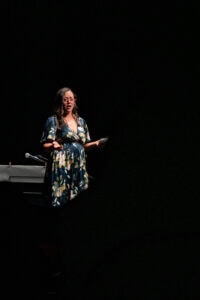
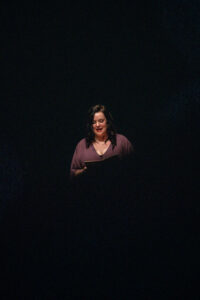
For storytellers Gabby McElwain, Bethany Green, and Mikeaela DiBerardinas, who bravely take over the stage to share their journeys of motherhood on a Sunday evening, the complexity and moments are gripping in their detail. We are right there in the trenches as Gabby remembers a postpartum magnesium drip being wheeled into her room, accompanied by barf bags and towels on ice, and a provider’s assurance that this is the worst she will ever feel in her life. We feel the chill as Bethany describes taking a call from her father, as she was beginning her own pregnancy journey. We walk in the warmth from Mikeaela, as she recalls the decision to embrace surrogacy, and a frank explanation her daughter offers to a stranger on the street.

We laughed from the belly. We held our breaths. We winced. We nodded. Our jaws clenched. In the absence of a tissue box, we took a break to go to the bathrooms, unravelling toilet paper to stuff in our pockets.
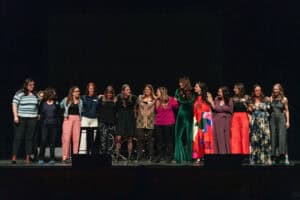
We heard ourselves in these stories. We realized that the seats around us were filled with allies. And how true it was, in the words of Roots Family Collaborative Executive Director Suzanne Bendick, “We are not alone.”

And when the Mom Band performed “Dreams,” I couldn’t have been the only one to hear this Cranberries song from my teenage years, reverberating through the decades.  I opened the door of my car, settling into the driver’s seat with dustings of crushed popcorn, spying a discarded art project on constellations in the rearview mirror, as I turned the key in the ignition, murmuring this song that has taken on a new meaning.

Oh my life

It’s changing every day

In every possible way


And oh, my dreams

It’s never quite as it seems

‘Cause you’re a dream to me

Dream to me

Did you get a chance to attend Moms Like Me in Bozeman? Let us know if there was a story that was especially meaningful for you that night  – or if a story shared in the last 10 years at the Moms Like Me event has helped you in your parenting journey. You can reach us by emailing gwyneth@hmhb-mt.org

Also, don’t forget the Helena community has their own storytelling event coming to them this spring, hosted by The Early Childhood Collaborative and the Helena Village Collective. You can catch Families Like Ours at the Myrna Loy on Friday, May 8.

Tickets can be booked at https://www.ecchelena.org/families-like-ours

Celebrating 100 episodes of the HMHB LIFTS Podcast

By The Power of Story

Illustration of a fox dressed as a podcaster, wearing headphones and speaking into a microphone, representing the LIFTS/Mother Love podcast.In the third week of February, Healthy Mothers, Healthy Babies Montana marked the 100th episode of our LIFTS/Mother Love podcast.

In case you missed “Home Visiting and Hope” with guest Tehya Tiegan, which aired on February 18, Tehya shares her story of motherhood and healing beyond addiction and speaks on the challenges of navigating both social stigma and the legal system through her recovery journey.

In the spirit of the LIFTS podcast’s vision – nurtured by storytelling coordinator Emily Freeman, and before this, Claire Larson – the 100th episode was the latest to take an authentic look at parenting beyond the reels, posts and sleek ad campaigns around us, offering something more profound and deeply needed: connection, hope and a path forward.

Through five remarkable seasons, Emily and Claire have offered exactly that, gently collecting and curating the narratives from families and providers across Montana and holding them out to listeners who have tuned in across the state each month.

Many stories covered the gaps in maternal care in our state, and recognized the efforts being made to remedy this – often at a roll-up-the-sleeves grassroots level in Tribal lands, rural communities and urban neighborhoods of Helena, Missoula and Butte. Some of our guests are tackling these chasms in the Montana Legislature or as birthworkers at the forefront of perinatal and mental health care.

Other stories we’ve highlighted are from mothers, fathers, grandparents and caregivers who have had their worlds rocked when a newborn is brought home. And when –  as Claire and Dr Amy Stiffarm discuss in their introduction to the “Life’s Blessings” episode in their 2023 Native American Initiatives series – the “fantasy collides with reality.” There has been honest reflection as the curtain parted on tumultuous perinatal mental health journeys. And bravely shared moments in painful seasons that blindside us. And there has been a celebration of strengths – sometimes hidden – that emerged in the moments when we are required to rise.

Illustration of a cheerful fox celebrating with raised arms, representing joy and milestone achievement for the LIFTS/Mother Love podcast.As I mentioned a few weeks ago, one of my first projects with HMHB has been to catalog these podcast episodes. And as I’ve made my way through more than five years of storytelling – which began with the backdrop of a pandemic in 2020 – I’ve described crying tears, chuckling along at a truth being told, and how I’ve definitely driven around the block a few extra times just to hear the end of an episode. I’ve also, more than once, torn the headphones off my ears, pressed “Stop” on the treadmill, and turned around to moms I barely know at the gym to hold out my earphones like a glass of water in the desert and said, “You HAVE to hear this.”


As we look back on 100 episodes and prepare for what we can only hope will be a 1,000 more to come – here are just a few LIFTS/Mother Love “Staff Pick” episodes that have resonated with us.

Do you have a LIFTS/ Mother Love podcast from the last five seasons that was especially impactful for you? We want to hear about it – and why. 

Do you have a topic or issue you would love to hear discussed in the future? We value your ideas and feedback and want to hear more.

DM us on Instagram or Facebook or send an email to gwyneth@hmhb-mt.org

LIFTS logo – Linking Infants and Families to Supports, representing Healthy Mothers Healthy Babies Montana’s perinatal and family support programs.

Taking a beat for Heart Month

By Community

By Gwyneth Hyndman, HMHB Storytelling Coordinator 

Madison Torres stands outdoors with her 4-year-old daughter, Luna Torres, smiling together in a candid portrait that reflects connection and warmth.

Three years ago, my mother-in-law sent me a buoy bell wind chime for Mother’s Day.

When I first hung the iron bell outside our home in Philipsburg, it swung mightily with the late spring storms, then went quiet as we settled into summer. It came back to life with October winds, and receded into hibernation in December.  Snow, sun, rain, stillness. The years since have followed this pattern. Weeks will go by before it is moved into action and sometimes I forget the bell is there.

So when it clangs with the wind, I’m sometimes disoriented. Wait. Are we in the mountains or on the ocean? It stops me in my path. Often, when I am most in need of being stopped. 

Like carrying a tantruming child from the car up the steps of our porch. Or fleeing our rowdy house like it’s on fire, to hurl a bag of trash into the bin – an excuse for 38 seconds of peace. And almost always when I come back from work or a walk and brace myself for all the landmines of a dinner hour with picky eaters.

I hear that bell and it is as if a force outside my world stills me. 

Just take a beat, it says. And my pounding heart, in obedience to that echoing bell, begins to slow.

Our hearts get a lot of attention in February. There’s Valentine’s Day (and in case you missed her 2024 post, give yourself a treat and read Claire Larson’s very real blog on date nights here) Galentine’s evenings, heart-shaped cookies, pink-themed crafts and cards for classrooms packed into the pockets of backpacks. 

It’s also American Heart Month, highlighting cardiovascular disease – one of the leading causes of pregnancy-related deaths in the U.S. – and it’s a month when awareness is raised for congenital heart defects, affecting approximately one in 100 babies born each year.  We remember to schedule annual appointments, give blood, to make healthy choices in how we eat, exercise and sleep. 

But sometimes, in the everyday hustle, our hearts are the pieces of ourselves we neglect.

Madison Torres stands outdoors with her 4-year-old daughter, Luna Torres, smiling together in a candid portrait that reflects connection and warmth.

Madison Torres and Luna Torres, 4.


Two doors down from me, Madison Torres – pictured here with her daughter, Luna – describes her own ritual for calm as a mother of two, and small business owner with her husband, Raul.

As a child, Madison remembers being sensitive to raised voices in her household. Taking a moment to consciously step back and ask herself how she wants her children to feel when tensions are high, helps her to break this cycle.

“I hold my chest and try to feel my heartbeat,” Madison says. “If I can breathe through this, the thought process comes and I start to feel myself calm down.”

A hand on the heart is also how Sami Garrett, an Anaconda mother of two under 5, works through moments of overwhelm.

“I often stop, put my hand on my chest and ask myself ‘What does my heart need?’” says Sami, who created the online community Good Enough Matrescence (GEM) in 2024, in response to a growing need she identified – in rural communities especially –  for connection and accessible parenting resources. She starts with this grounding question to slow her adrenaline before moving on to the next task.

I’ll also say to myself ‘This should be happening,’” she says. “And instantly my shoulders drop and I can take some breaths.”

Sami’s words align with the first paragraph’s of the GEM manifesto:

We are no longer available for the pressure

The endless to-dos

The shoulds, the shame, the guilt, the striving to be the “right” kind of mom.

We are not here to perform perfection.

We are here to be present.

For Bozeman-based licensed child counselor and Sustainable Parenting founder, coach and   past LIFTS Podcast guest Flora McCormick ( you can find our 2024 podcast with her here) it’s a physical rock with the word “And” written on it, that she centers on to combat the maternal striving for impossible expectations, she identifies in herself and the world.

“This is something that comes from dialectical behavioral therapy,” Flora explains, referring to the behavioral therapy that focuses on mindfulness, emotional regulation, distress tolerance and interpersonal connections. “I’ve reflected on this often. So basically when we are saying something like ‘I just wish that I had more patience’… we continue on to say ‘AND I’m proud of myself for trying,’” Flora says. “‘AND’ has always been a really grounding word for me.”

Another mantra Flora said she took away from years of counseling:  All you can do is all you can do – and that is enough.

“Just in my hardest moments, beating myself up, thinking ‘why can’t I, why won’t they,’ ‘why haven’t I’  – these were grounding words to always come back to. I put it on a sticky note when I was first a parent and just looked at it and looked at it and looked at it.”

“It’s really that first form of radical acceptance,” she adds.  “It is a simple phrase, but to really sink into it and accept it, it means letting go of the ‘woulda, shoulda, coulda’ to allow this to be true. That’s pretty powerful.”

All you can do is all you can do – and that is enough.

Just about the kindest words I can tell my heart.

On a recent morning, as the girls run wild in the living room, I sit with a coffee on the couch, listening to them pretend they are running a vet clinic. I prepare to get up because there is so much to do. But the window is open on this too-warm February day. And as I watch the wind move through pines outside, I hear the bell.

I go ahead and take that beat. 

And this morning, for the sake of my heart, that is enough.


Photos by Gwyneth Hyndman

Stepping into a new season of storytelling

By Caregiving, Community, Community Support, Early Childhood, Maternal Mental Health, Parenting, The Power of Story

By Gwyneth Hyndman, HMHB Storytelling Coordinator 

I place Hamnet on my knee at page 207 and stare beyond the wing of the Boeing 737 window. My face is wet with tears I wipe away with a sweatshirt sleeve, feeling everything that powerful stories ignite.

Icy peaks of the Gallatin Range and Tobacco Root Mountains rise through the clouds, thousands of feet below as we head south and west towards the Pacific Ocean. I give Maggie O’Farrell’s imagined backstory of Shakespeare’s tragedy a pause so I can pull it together, accept the tissue handed to me from the woman in seat 27 B, and remind myself I’m only gone five days and that traveling alone right now is a luxury.

Instead, the ache to hold my daughters is almost gravitational.

Flying solo with Jessie and Eliza, now 6 and 4, were some of our first bonding moments. I had more than 40 years of travel on my own before I became a mother. After four pregnancy losses, I suspect part of me held back from planning beyond nine months. Both births became C-sections. I was never able to breastfeed successfully. I shook off fumes of failure every time I stood in the checkout line with baby formula at our local grocery store. But flying with each of them at six weeks old to visit my parents in California, watching skies, mountains, oceans, their sea shell earlobes and twitching noses as they slept in my arms, undisturbed by the world below, as the turbulence worked its magic, was like we were finding our footing. Up here, it was safe to fall in love with this new life in my arms, without feeling like I was tempting fate.

O’Farrell’s words were a reminder that this rose-hued season – with all its conveniently forgotten exhaustions, frustrations and nightmare toddler travel tales to come – is behind me now. And if you’ve read Hamnet, or watched the stunning film adaptation as it soars through the 2026 awards season, you’ll be aware that it is a guide through the darkest places a parent can walk.

Hamnet is a reminder that storytelling – both the story, and the telling of it – is illuminating.

In my first few weeks as the Storytelling and Engagement Coordinator for Healthy Mothers, Healthy Babies, I’ve made my way through half a decade of storytelling in Montana. I’ve cried while washing dishes and listening to “EnduringLoss with Emily Tosoni” in the first season of the Mother Love/LIFTS Podcast. I’ve stood in the middle of my office and said “Huh,” out loud to no one in particular, when a statistic hit home in the “Mining City Stories” series of Season 4. I’ve allowed myself to be unsettled and angry while watching Siloed, a documentary on the disparities in maternal healthcare in rural Montana, and more than once, as first-person narratives were shared in the last five years of our LIFTS Magazine, thought: Hey, me too.

Stories don’t just bring us to tears and leave us there. They can move us to take action. They ask that we clarify our purpose and at their best, face and explore our fears.

For those of us reading on our couch during naptime, or listening in our cars, stories can be ports in a household storm, a stolen hour of stability and connection in the chaos and devastation of the world outside.

For the storyteller, the very art is like dumping a purse all over the floor to sort out what’s actually been buried in there. We make decisions on what’s treasure and what’s trash every time we pick up a pen or open our laptop.

What do I hold on to? What can I throw in the garbage to make this handbag a little less heavy? What can I share that might be valuable?

As the team at Healthy Mothers, Healthy Babies sits down to map out our 2026 season of the LIFTS Podcast, and look ahead to the 6th annual issue of our LIFTS Magazine this summer, I’m honored to step into a role that Claire and Emily established and shaped with such respect, trust and tenderness, bringing our rich stories across Montana to the page and podcast.

If you have any thoughts on topics, issues and policies that you believe are important to parents, caregivers and providers in our state, you can reach me at gwyneth@hmhb-mt.org

And as always, we welcome your story submissions at stories@hmhb-mt.org

I’m so thrilled to read and hear your words in the months to come,

Gwyneth