Berry Medicine Native Birthworks Initiatives – formerly Native American Initiatives with HMHB – launched on April 1, 2026, continuing on as an Indigenous-led nonprofit, with a specific focus on the health and wellbeing of Montana’s Native families.
This week Berry Medicine Founding Executive Director Dr Amy Stiffarm shares her thoughts with HMHB storytelling coordinator Gwyneth Hyndman on the work that went into this initiative, the story of its namesake, and why Berry Medicine has been a long time coming.
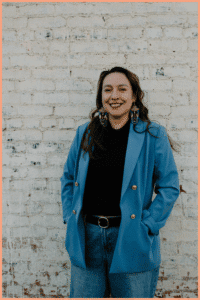 Gwyneth Hyndman: Can you talk about the origin of the name Berry Medicine?
Dr Amy Stiffarm: I remember being in an early planning meeting and at that time being very linear in my thinking. We were having this great, 3-hour long conversation about what the needs were, and what we could do and what areas we could address and how we could work together.
Everyone was asking “Well, what are you going to call this?”
I kept coming up with these super long, very logical names involving Native birthworker, or Native maternal health and institute – to explain what our organization does. And I thought – “You know what? I’m just going to give this a break.”
Fast forward to the 2025 summer. At this point we have consultants and we’ve applied for seed funding and we have people with expertise to help figure out our path forward. And I started reading The Serviceberry by Robin Wall Kimmerer.
I remember being kind of blown away – just very surprised that what she was talking about was what I had always known as juneberries.
Kimmerer was describing how these berries come back year after year in June. They’re dependable. You don’t have to tend to them – they’re growing in the wild. Yet everybody has a role – birds come and feast off of the fruit, and then they go and spread the seeds, and then the pollinators come and there is just this beautiful, natural way of supporting one another.
There’s also the medicinal use of berries in women’s health and pregnancy. Like when we did the Zaagi’idiwin Indigenous doula training from Melissa Sveinson, we made pins out of felt and seed beads in the shape of a strawberry. People who complete the training wear them and it represents birth work. So it just kind of clicked: This is the feeling of the organization that we’re creating.
What we’re bringing to this, and what we’re trying to restore, is that medicine of taking care of one another. Of that kinship and abundance. That there’s enough for everyone. And you know, that could mean anything. That there’s enough health, enough support, there’s enough love.
I think that’s really decolonizing work. And a big part of what we do is negate the impact of colonialism to restore that support in kinship networks they way they were prior to colonization.
Gwyneth Hyndman: What has the feedback on Berry Medicine been like, even in the last few weeks since this direction was announced?
Dr Amy Stiffarm: I think people are just like, “Alright, let’s go!”
You know, I’m really grateful there’s so much trust, which we’ve worked really hard to build, and grow these relationships that we already have. It feels like it’s a lot of the people that we’ve done work with while at HMHB who are already part of our different networks that are sharing and expressing support, congratulations, and gratitude.
I think for a lot of Native people, it’s having something that is our own. A common theme that I’m hearing is, “We have something for us now.”
Even though HMHB has always been for everyone, I think this is affirming of what we were feeling and what we were seeing a need for: work that would be Indigneous-led and fully focused on Indigenous lives.
So yes, it’s very cool to see so much love.
Gwyneth Hyndman: Can you just talk a little bit about what Indigenous-led birth work looks like and why that is important in Montana right now?
Dr Amy Stiffarm: With Indigenous health – when it comes to health promotion or any type of health improvements in Indian country or Tribal communities – Indigenous scholars and people in this field really advocate for Indigenous-led initiatives and solutions based on Indigenous values and culture. I think one reason why we have to be very specific about that, is because it hasn’t been that way for so long.
Part of the build-up towards this moment was that Health Affairs paper that we wrote about, on Tribal engagement and about linking families to supports on the LIFTS online resource guide.
In that paper we talked about how so often, and for so long, the way to help Tribal communities has been to take an initiative that works somewhere else, and say, “Okay, here you go – we’re helping.”
And it’s always been these western models. So, we’re only getting so far – especially when you’re looking at maternal health.
Maternal health in America, in itself, is not great to say the least, right? And when we’re looking at health outcomes and what’s going on with Native women and birthing people, it’s not good – it’s really bad.
So that is one of the reasons that we need to really think about when we’re approaching communities from the outside and we want to help – and ideally they’re asking for help – it’s asking, what does helping this community really look like?
What the trend in research and history has shown is that there’s always been this approach of going to Tribal communities and saying, ‘Okay, here’s what you’re gonna do – alright, bye.’ Or this helicopter research where you come in for a little bit and then you go, and then asking: ‘Well, why aren’t you improving?’ Even the best-intentioned interventions from the best-intentioned people can cause harm and at the very least, be ineffective. One thing we really focused on in our Indigenous health PhD program has been to really challenge and think critically about what is, and what’s not, actually working.
Indigenous people in what is now known as the United States have been through a lot of traumatic experiences, many of which were intentionally implemented through Federal Indian policies that were created with the intent to destroy our kinship networks and our family systems, our culture, our homelands. This has had significant impacts.
But at the end of the day, we’re still here. Our ancestors survived and we’re here today because of some kind of strength. And when we look at what that strength is, it’s our cultural knowledge. Despite everything, this has survived. But there are more revitalization efforts that need to happen, especially efforts focused on pregnancy, birth, and parenting and that’s how Berry Medicine hopes to help.
One thing that I’m really grateful for from my education is how it empowered me and helped me feel confident in western-led fields as an Indigenous person. It empowered me to feel like, “Oh wait, I have a different perspective.” It doesn’t mean that the way I do things is folklore. Or mystical. It’s that these are Traditional Knowledge systems that have been around for a long time and come from years and years of rigorous evaluation and data collection from our ancestors on this knowledge.
But the idea and the reason for having this as Indigenous-led is acknowledging that, who else would know what their community needs and what their community strengths are more than that community themselves?
Gwyneth Hyndman: What are you personally excited to see happen as Berry Medicine grows?
Is there a specific project or projects in the next 12 months that you really want to focus on right now?
Dr Amy Stiffarm: I feel like kind of a broken record about this: We’ve had a lot of training for Indigenous doulas. They are here and a lot of them are serving their community, mostly in a volunteer capacity. So I’m really just looking for ways on how to continue supporting them and finding a way to get them paid so that they could serve their communities, right? Like they are ready to go. But they are also working full-time jobs because there’s no reimbursement; there’s no payment right now for that work. And it’s just so needed.
And it’s just right there. So it’s really just trying to find a way to make sure that families are able to access those strengths within their communities.
Gwyneth Hyndman: Can you describe the relationship between Berry Medicine and HMHB going forward? What does that look like day to day?
Dr Amy Stiffarm: You know, HMHB is such a powerhouse and they have an amazing network of people and programs that they’re supporting.
I just really respect all of the work that HMHB has done and continues to do, and I feel like in some ways our partnership will almost be stronger.
There were quite a few times when it was like, there’s one seat at a table. Is it going to be the Executive Director, Stephanie Morton? Or Amy Stiffarm from Native American Initiatives? Because there’s only one seat. Which is fair, depending on the scenario. But there were definitely times when we were thinking about our perspectives and expertise – and both were needed.
So I think having designated seats at certain tables or at certain meetings is going to be helpful. I think connecting communities to resources that HMHB has – and vice versa – will be so useful. I see us continuing to work together and utilizing each other’s resources. That’s going to be good for the whole state.
Gwyneth Hyndman: Are there any final words you would have on Berry Medicine that we haven’t covered?
Dr Amy Stiffarm: You know, we have had a lot of great mentorship and a lot of great “north stars” to look towards. There’s Hummingbird [Indigenous Family Services] in King County, Washington and the Alaska Native Birthworkers Community. It’s just really kind of looking at them like, “Okay, are we gonna be like Seattle or are we gonna be like Alaska?”
I’m so grateful to have the privilege and opportunity to be mentored by them. Learning from them helped me see which parts could actually be replicated in Montana and which parts would need to change. We have a lot of room to grow as far as building on programs. But, you know, Berry Medicine was actually incorporated in April 2025. And it was a year before that when we were first having the conversations about this.
I think in some ways it feels fast. But then I’m reminded, oh my gosh, Berry Medicine has been kind of a long time coming.
You know, you can’t do this kind of thing in a silo. It really has to be about community, and having a lot of good mentorship and people to lean on is foundational to launching Berry Medicine.
It’s really exciting to be at this point.
Want to know more about the mission of Berry Medicine? You can find it here or by emailing info@berrymedicine.org to get connected.
You can also find out more about the HMHB LIFTS Resource Guide here.

 Selene heard about Nurse Family Partnerships through WIC when she was four months pregnant – her daughter, Delia, is now six months old. Selene continues to meet with registered nurse Meredith Lucas, who has become a trusted confidante for more than a year.
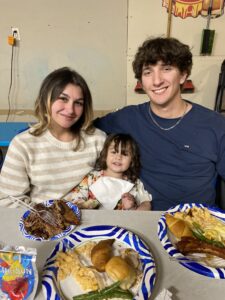 Tristan was 18 years old and 10 weeks pregnant with her daughter, Emberly, when she was first connected with home visiting nurse
 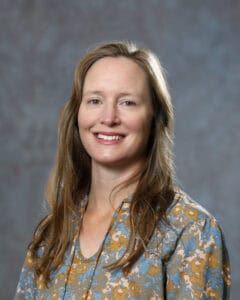 Meredith is a Montana native and lifelong learner – so traveling and experimenting with different professional and personal endeavors has become a passion as she has explored and worked through the United States and South America. Once an aspiring Spanish professor, now a nurse home visitor for the perinatal population, her curiosity and drive to advocate and inspire positive change in perinatal health care has become a refined focus. When she’s away from work, Meredith can be found with her two children, Buckley and Iris, or navigating the terrain with her dog, Stanley.
 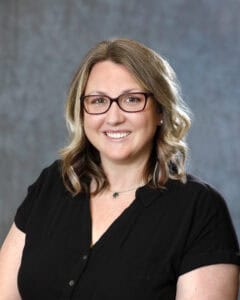 Hannah has been a nurse for almost 17 years and has been a
  It is 4:53 p.m. in the afternoon on North 6th Avenue. I run towards
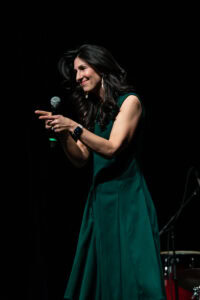
  reason I am walking briskly across the street, sliding through the door, to find my HMHB co-workers and then a seat in the balcony of a full house before the lights dim. Flora is the Emcee and “Vibe Steward” – an aspect to this evening that feels warmly satisfying, like magnetic tiles clicking into place. The infant son she held in her arms that winter is nearly a teenager.
  We laughed from the belly. We held our breaths. We winced. We nodded. Our jaws clenched. In the absence of a tissue box, we took a break to go to the bathrooms, unravelling toilet paper to stuff in our pockets.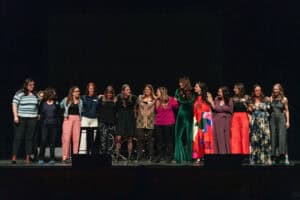
 In the third week of February, Healthy Mothers, Healthy Babies Montana marked the 100th episode of our LIFTS/Mother Love podcast.
 As I mentioned a few weeks ago, one of my first projects with HMHB has been to catalog these podcast episodes. And as I’ve made my way through more than five years of storytelling – which began with the backdrop of a pandemic in 2020 – I’ve described crying tears, chuckling along at a truth being told, and how I’ve definitely driven around the block a few extra times just to hear the end of an episode. I’ve also, more than once, torn the headphones off my ears, pressed “Stop” on the treadmill, and turned around to moms I barely know at the gym to hold out my earphones like a glass of water in the desert and said, “You HAVE to hear this.”



Recent Comments