Tag

early childhood Archives - Healthy Mothers, Healthy Babies: the Montana Coalition

A Trusted Presence: Selene’s Experience with Home Visiting

By Home Visiting

Selene heard about Nurse Family Partnerships through WIC when she was four months pregnant – her daughter, Delia, is now six months old. Selene continues to meet with registered nurse Meredith Lucas, who has become a trusted confidante for more than a year.

 At the very first visit, I thought, “I don’t know if I want to continue this.” But the more I got to know Meredith, the easier it became. I was able to open up to her. She told me a lot about programs I could look into. And she was always giving me information with each monthly milestone for the baby. Whatever I needed. 

Now, I don’t like missing our appointments –  I think I’ve only ever missed maybe one of them. My mom actually passed away some years ago, so it’s good to talk to Meredith and ask questions about Delia’s age, milestones, and what I should be teaching her. 

Before I gave birth we went over one of those birth plan forms to take to the hospital – what kind of music I wanted, how I felt about interventions, etc.  Meredith knew that giving birth without my mom was something I struggled with. So as part of my birth plan, she suggested I bring a photo of my mom to the hospital with me. I did that and it was really soothing for me.

I did want to have a natural birth with no medications and I tried for this through the whole pregnancy. When I went to the hospital, my fiance, Monty, was there with me the whole time. He was the one playing the music, trying to help me feel more comfortable. I was in labor for 26 hours and I was given an ultimatum to take the epidural or have a C-section, which I chose to have the epidural. There were some decisions about medications I was advised on after this that didn’t work out and actually seemed to make things worse. That was really frustrating since I was doing my best to follow the doctor’s advice. But when I trusted my instincts on a medication they recommended, and said no to this, it ended up being the right call and things were regulated. You hear that message that “you are the one who knows your body the best.” That can be a risky statement at the moment. But it was awesome because that was the right move – that made me feel like I got some power back. Also, it gave me a perspective on that really helpless feeling your partner can have in that room. 

 Monty did the cord cutting and when Delia came out, she looked right at him, which the doctors said was surprising. I guess they usually don’t really acknowledge dad. They just want mom. But Delia looked directly at him – it was beautiful. 

When I started meeting with Meredith again, I think the main thing I was wanting to know was if things would ever be regulated with Delia. Everything just seemed so all over the place when they’re newborns. But I think it was more like the comfort of having Meredith there, more than anything, both before and after I gave birth. She had insights about postpartum stress and had a list of therapists if I wanted to connect. Meredith helped me get in touch with a doula for placenta encapsulation, then she helped with breastfeeding and also helped me get signed up for Medicaid. She’s been able to come to the house a few times and to do weight checks for the baby when I’ve been feeling like I need to know exactly what she’s weighing. She was a huge help every step of the way.

Delia is now six months old, and it’s been more than a year since I’ve been meeting with Meredith.

We’ve mostly met at little coffee shops in the morning and that’s been a comfortable setting. And then sometimes here and there she’ll come to the house and see the baby – it really just depends. She just goes where I feel like I want to go. 

In the beginning  I felt like visits were going to be a place where they judge you or report things back – whatever bad things they can get out of you or point out things you’re not doing right. I thought that this was just going to be a negative thing. Although it turned out to bring out the best in me. Meredith would highlight everything I was doing wonderfully as a new mother. The more I just kind of kept going with it, the more I ended up finding out about Meredith as well. I was able to open up to her and trust her.  

If anyone asked me, I’d tell them that home visiting programs are a huge advantage for moms – during pregnancy, but especially postpartum. I really, truly think this has been such a blessing for us – I will always recommend it highly for support in all areas.

You can use the LIFTS Online Resource Guide to find home visiting programs across Montana—just type “home visiting” into the search feature. If you need help finding a program, you can also call the LIFTS Warmline at (406) 430-9100 for personalized assistance.

Support from the Start: Tristan, Emberly, and the Power of Home Visiting

By Home Visiting

Tristan was 18 years old and 10 weeks pregnant with her daughter, Emberly, when she was first connected with home visiting nurse Hannah Akard through Nurse Family Partnership. Now 21, Tristan speaks on the role Hannah played in her birth journey, and the joys and challenges Hannah has been present for as Emberly, now 2, continues to thrive.

I remember I had gone to see a nurse and they had a little poster by the door for Nurse Family Partnership. I read it while I was waiting on the nurse to come back in, and I was like “maybe I’ll give it some thought.” I was signing up for WIC at the same time too and I was thinking that it seemed like a resource I needed. 

Garett and I got together in our senior year of high school and we’ve been together since – but we were super shocked about the pregnancy. We were so young. I went into it knowing a little bit about babies and birth, but I wanted to be fully informed. I wanted to know everything so no one could say “you don’t know anything –  you’re just 18.” 

We both went to meet up with Hannah for a coffee the first time. Then we started meeting biweekly. I did a lot of my own learning and Hannah helped me with that as well.  Like with what’s changing in my body, what’s going on with the baby, and life after having a baby, and what postpartum depression and anxiety was. 

Garett was there at some of the meetings with Hannah. Sometimes I’d bring material from Hannah home and I reviewed it with him. He was very involved in the birthing plan – he knew all  the stretches to help relieve all the pressure during pregnancy and then also during labor. He was amazing during the whole process.

I had three different birth plans – an A, B, and C. Hannah was just super supportive through it all because I’m very much a natural person. So she really helped me with finding natural remedies. But Hannah and I also talked about how it might not go perfectly. So I went ahead and made B and C plans. But it did honestly, end up being the best birth.  I used aromatherapy and I did a lot of prep before. I stretched and I did these workouts with the yoga ball. 

I delivered naturally. It was 19 hours, with me pushing for less than 30 minutes. They put Emberly on my chest and it was like my whole world shifted. 

The only part that didn’t go to plan was that I didn’t get my “golden hour” that we’d talked about right away. I wasn’t delivering my placenta and then I was losing blood and a doctor had to step in and do what needed to be done. So Garret got her, and he had his skin to skin time with her until I could hold her.

After, I was texting Hannah, sending her pictures of Emberly and filling her in on the birth. Then she got to meet her and see her in her little car seat with her cute outfits and stuff –  it was just so sweet. 

I did fall into postpartum depression and anxiety pretty bad for a little bit. I didn’t want to tell anybody. When I was doing those screenings, I just kept lying on them. I was thinking, “I don’t want anybody to think I’m unfit.”  You know? Just the fear of all that. But then I had this one day –  I don’t remember what happened. I broke down to Garret and I told him everything. He said I  needed to talk to somebody about this. And so I talked to Hannah about it and we got very open and honest and she helped me with all the resources that I needed. Even just being open and talking about what I was feeling helped me.

I’m 21 now, and Emberly is two – she’s very independent. Anything she can do herself or she wants to do herself, she will do. So that’s pretty fun. She is super sweet and well-mannered – that was a big thing for me. She’s very much a daredevil. 

Hannah has been my rock from the beginning. She knew before anyone about the pregnancy, other than Garret and a few key people. So it was really special to be able to show her my baby after everything that we’ve been through. We finally got into our own apartment six months ago and we have just kind of been thriving. 

It has been so amazing as a young parent to have somebody who’s not related to me, to be able to give me reassurance and information. With Hannah, it was always super neutral. It was like, “Here’s information. Take it if you want it – don’t take it, if you don’t want it. No matter what, I’m here for your peace of mind.”

You can use the LIFTS Online Resource Guide to find home visiting programs across Montana—just type “home visiting” into the search feature. If you need help finding a program, you can also call the LIFTS Warmline at (406) 430-9100 for personalized assistance.

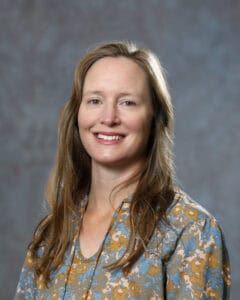
‘Let’s Talk About It’: Meredith Lucas on Showing Up for Families

By Home Visiting

Meredith is a Montana native and lifelong learner – so traveling and experimenting with different professional and personal endeavors has become a passion as she has explored and worked through the United States and South America.  Once an aspiring Spanish professor, now a nurse home visitor for the perinatal population, her curiosity and drive to advocate and inspire positive change in perinatal health care has become a refined focus. When she’s away from work, Meredith can be found with her two children, Buckley and Iris, or navigating the terrain with her dog, Stanley. 

From my perspective, a home visiting program is working to close the gaps and create a judgement-free presence in a way that’s unique to each person. It gives people the space to be who they are.

There are people who have the benefit of having a family or friends that really step up at this time, are there for them and do all the things that need to be done – I think that is wonderful. But I just don’t think that’s the case for the majority of families. So many of us are kind of on our own trying to figure things out, and you take on so much that you shouldn’t have to. Sometimes the difference is just having that support person who says: “Hey, let’s talk about it.” Or “What are you feeling? What do you need?”

Yes, there’s the healthcare aspect to home visiting – supporting people through that is important. But I think we get more of – “I just need somebody here to really be with me at this time in my life.” 

I’m originally from Billings. When I was 18, I moved out to Oregon to go to school and I majored in Spanish. I traveled down to Mexico and South America and was on that path of just working towards becoming a professor in Spanish, but things changed and I ended up moving to Oklahoma and working with non-governmental organizations like Feed the Children and Boys and Girls Club. I had my first child during nursing school and was a night shift nurse while working in research. Then after Covid, I decided I needed to be closer to my home base, and we moved back from Kansas up here to Billings.

I had my second child and had the opportunity to use daycare and switch gears with a day shift job – and that’s how I came into this position as a home visiting nurse. In supporting other parents and mothers who were in the same boat as me, I feel like it was like I was widening my own community. 

I’m the person who can provide advocacy and education and walk alongside new parents. I’m there to ask “How do you envision yourself? What issues have you been dealing with – and how would you like to approach those issues?” They’re doing the hard work – I get to be there to support them when they need me and tell them it’s going to be okay. That we’ll figure it out. 

With the rise in the knowledge and advocacy of perinatal mental health, we’re allowing people to be vulnerable and not carry that weight all themselves. We’re also normalizing not feeling okay during a period of time when you’re told you’re supposed to be having the time of your life, you know? That’s not always the case for people. And if they’ve had a lot of their past, kind of creeping in during parenting – what do you do with all that? 

A lot of people have burdens they’re carrying around, and they need to feel safe. That’s a big one. They have a need to feel like they’re not the only ones that are, say, having a child with developmental delays. They might just need to gain perspective on what’s going on right now.

We remind our clients that if anything, at least they know they have a choice. They can choose to call me – or not. They can see me – or not. And that in itself is an intervention and outcome for a person who may not have had a lot of decision-making opportunities in their life. 

If there’s hesitation, that’s completely okay and normal. I’ve softened my approach a lot since I first started. You don’t need to sign anything or enroll. We can just talk or you can get to know me. Because some people do require a lot more relationship building upfront. It’s just allowing that person to be the decision maker. Maybe in the grand scheme of things, it’s just a little ripple in the pond, you know? But it’s something.

Everyone has an internal dialogue. It’s hard when the internal dialogue is not a positive one. I really like to support people by providing a positive dialogue no matter their situation. Reminding them that there’s still hope and there’s still the ability to change. This is not the end, you know? This is only the beginning.

You can use the LIFTS Online Resource Guide to find home visiting programs across Montana—just type “home visiting” into the search feature. If you need help finding a program, you can also call the LIFTS Warmline at (406) 430-9100 for personalized assistance.

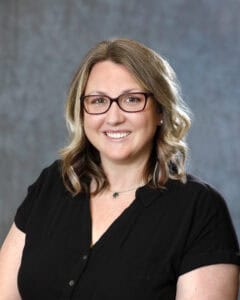
‘You Don’t End Up Here by Accident’: Hannah Akard on Heart, Trust, and Home Visiting

By Home Visiting

Hannah has been a nurse for almost 17 years and has been a Home Visiting Nurse with Nurse Family Partnership in Billings for three years.

She and her husband have six children – fostering and adoption are part of their story – and Hannah will be the first to tell you that she loves her role as an RN. But even more, she adds, she loves each of the families who have given her the honor of being invited into their stories. 

I always tell people, “you don’t end up in this job by accident.”

Since I was little, I’ve always, always loved moms and babies. I was a missionary kid and I think that’s just part of my DNA –  I knew I wanted to be a nurse since childhood.

When I was in high school, I actually interned with a midwife and I got to follow her on some prenatal appointments and several deliveries. On one of the deliveries she didn’t make it in time. So at 16, I helped the mom deliver and I actually caught the baby. It was life changing. Just a really incredible experience to see what it looks like to support a woman during pregnancy, then during labor and delivery, and postpartum.

From my personal experience, I had my first baby during finals week in between my two years of nursing school and when I graduated, I had a 1-year-old. My husband and I went on to have six kids within eight years – three biological and three adopted. And through that process of fostering especially, I feel like it really gave me a heart for mamas who were struggling and wanted to be moms, but didn’t have support systems in place, or didn’t have people advocating for them, or advocating for their babies.

I actually stepped into home visiting from being a NICU nurse. I’d been a NICU nurse for a long time. I was also a flight nurse for a while – but there was not a good work/life balance. I was like “there has to be a way that I can still take care of mamas and babies and be a good mama myself.” So I legitimately just Googled “Mother/ Baby, Nurse”- and this position popped up.

I get the privilege of being there through pregnancy, which is such a pivotal time for a mom – and then through the first two years of baby’s life, which is so foundational. This has been such a gift to me, because that is something I didn’t get in the NICU.

There are so many joys and heartaches we are invited to share in. Sometimes a client’s mom – maybe they don’t have that relationship. Or they’re estranged or, you know, her mom isn’t alive anymore. They need somebody who can rejoice with them. Who can sit in the pain with them. Just continue to walk every step of these critical first few years with them. Consistency is huge. For some moms, we are the longest and most consistent relationship they have ever had. You really, really do give these families your heart. We pour our blood, sweat, and tears when walking through the hardest of times with them, which is such an honor.

I had an experience with a mama where I went to the first postpartum visit and I walked in the door and she was holding her baby. And I was just like, “Oh my gosh, she’s beautiful.” And she was like, “I want you to hold her – I want you to be the first to hold her.” And I just …  it wrecked me. 

We really work hard to try to collaborate. And that collaboration really looks like bringing in the right people. Sometimes these are connections for behavioral/mental health or housing. One of the first things we ask moms is, “Do you have Medicaid?” “Are you connected with WIC?” “What’s your living situation?” We can’t really go further until those necessities, those high needs are met. Nothing else really matters. Those are the priorities, you know, the focus initially when we start meeting with mamas. 

I do feel like the acuity of the situations that our mamas are in, just in the three years I have been here, has significantly increased. When I first started, we maybe had a mama whose main need was finishing high school. Or they needed housing or resources as far as, you know, just making the paycheck go through the rest of the month. Sometimes it was a relational issue.

But now I feel like with so many of our mamas that we’re working with, there’s mental health issues. There’s substance use issues. There’s intimate partner issues. There’s legal issues. Housing, I feel like, has been a constant the whole time I’ve been here. There’s just more acuity and complexity now.

Ultimately, it’s really trying to just meet them where they’re at and finding out what their priorities are. And remembering that their priorities may not be my priorities. So how can I support what is important to you?

 The beautiful thing about Nurse Family Partnership is that this is evidence-based. The numbers really show the return on the investment. And yes, there’s the financial part of the investment, but it’s also the return on the investment of relationships. Of time spent with that person and the trust that is built. Home visiting is very valuable for our community because we have our eyes on the most vulnerable.

It’s breaking down walls where racism, economic status, and past experiences of judgment have created barriers. Home visiting nurses have the opportunity to get past all of that.

For me, visiting with mamas during pregnancy and continuing to care for them and their family until the baby turns two – that’s more than a two and a half year relationship.  I don’t know any other area of nursing that I would get that opportunity to really be a part of a family’s story –  just like each of them are a part of my story.

You can use the LIFTS Online Resource Guide to find home visiting programs across Montana—just type “home visiting” into the search feature. If you need help finding a program, you can also call the LIFTS Warmline at (406) 430-9100 for personalized assistance.

Strong Families Start Here: Honoring National Home Visiting Week in Montana

By Community Support, Home Visiting

National Home Visiting Week is recognized from April 20–24, 2026.

This nationwide observance celebrates the life-changing impact of home visiting programs and the dedicated people who make this work possible every day. Alongside the Montana Home Visiting Coalition, we’re excited to highlight home visiting in Montana by recognizing families who have benefited from home visiting, as well as the outstanding home visitors serving communities across our state.

We’re grateful for the Governor’s Proclamation celebrating the life-changing impact of National Home Visiting Week  here in Montana and helping showcase the importance of this work across our state.

So, let’s take a moment to hear directly from Montana families about why they said yes to home visiting. Watch their stories in this short video:

Frequently Asked Questions About Home Visiting

Next, let’s walk through some frequently asked questions about home visiting. Many people aren’t quite sure what it is or whether it’s right for them and their families – and that’s okay. Our hope is that this week helps more people understand that no matter where you live, your income, or your circumstances, there may be a home visiting program available to support you.

What is a home visiting program, and how can it benefit my family?
Home visiting is a voluntary, evidence-based support and coaching service that strengthens families during pregnancy and early childhood.

Trained home visitors, such as nurses and early childhood specialists, partner with expecting parents and caregivers of young children to build parenting skills and connect families with services that support healthy physical, social, and emotional child development.

Who can participate in a home visiting program?
Eligibility varies by program, but some are available regardless of income or background.

While access is not yet equal across all areas of Montana, there is ongoing statewide work to expand availability and ensure more families can benefit.

What happens during a home visit?
Each visit is tailored to your family’s needs and goals. Home visitors work with you to build confidence in parenting and support your child’s development.

This might include:

  • Discussing developmental milestones
  • Answering parenting questions
  • Providing lactation support
  • Offering health and safety guidance
  • Connecting you with community resources

What if I’m not able to have someone visit my home or I don’t have a home?
Home visiting programs are designed to be flexible, supportive, and non-intrusive.

If in-home visits aren’t a good fit, many programs offer alternatives such as virtual visits or meeting in community spaces like libraries or coffee shops. You can work with your program coordinator to find an option that feels comfortable for you.

Is there a cost to participate in a home visiting program?
Most home visiting programs are offered at no cost to families. They are typically funded through state or federal programs, nonprofits, or community organizations.

How do I sign up for a home visiting program?
The best way to get started is to connect with a local program near you.

You can use the LIFTS Online Resource Guide to find home visiting programs across Montana—just type “home visiting” into the search feature. If you need help finding a program, you can also call the LIFTS Warmline at (406) 430-9100 for personalized assistance.
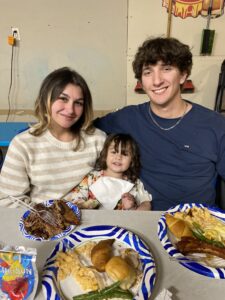
So join us this week! Here on the blog and across social media, we’ll be sharing stories from Montana families about why they said yes to home visiting and highlighting the dedicated home visitors who walk alongside them every day.

Follow along! And if you have a story about how home visiting has benefited you and your family, we’d love to hear from you. Reach out to us at stories@hmhb-mt.org.

EARLY CHILDHOOD SUMMIT 2026

By

Join us as we celebrate NAEYC Week of the Young Child and Strengthening Families Month this April! The Early Childhood Summit brings together child care providers, educators, business leaders, and parent advocates to connect, learn, and collaborate to strengthen early learning opportunities and support the early childhood workforce in our community.


Birth to Five Launch Labs: Engaging families as true partners in system design and decision-making

By

With the release of the Bright Futures reports, Montana has a compressive road map for strengthening early childhood systems. In response, the Montana Early Childhood Network is hosting a series of “Launch Labs” to bring partners together from across the state to work on each of the five priority areas of the strategic plan to help turn these reports into action.

May 27, 2026 01:00 PM

Register here!

Birth to Five Launch Labs: Establishing sustainable governance to ensure alignment, accountability, and tribal consultation

By

With the release of the Bright Futures reports, Montana has a compressive road map for strengthening early childhood systems. In response, the Montana Early Childhood Network is hosting a series of “Launch Labs” to bring partners together from across the state to work on each of the five priority areas of the strategic plan to help turn these reports into action.

Apr 22, 2026 01:00 PM

Register here!

Birth to Five Launch Labs: Improving coordination and navigation across programs and sectors

By

With the release of the Bright Futures reports, Montana has a compressive road map for strengthening early childhood systems. In response, the Montana Early Childhood Network is hosting a series of “Launch Labs” to bring partners together from across the state to work on each of the five priority areas of the strategic plan to help turn these reports into action.

Mar 25, 2026 01:00 PM

Register here!

Mother Love is Now the LIFTS Podcast!

By Uncategorized

By Emily Freeman, Podcast Host and HMHB Storytelling Coordinator

New Season, New Name! 

For the past five years, the Mother Love Podcast has been sharing stories of parenting and caregiving in Montana, illuminating the challenges and triumphs of the 0-3 years. In conversation with providers, families, advocates, and more, our podcast aims to illuminate both the challenges and celebrations of pregnancy and parenting, and to provide a space to learn, listen, and uplift Montanans across our vast state. 

Starting this fall, Mother Love is getting a new name: the LIFTS Podcast. You can expect the same great content, but with a show title that fits neatly in line with some of other other projects: the LIFTS online resource guide, and LIFTS magazine. LIFTS stands for Linking Infants and Families to Supports, and it’s one of the things that we do best at HMHB. Additionally, we wanted the name of the podcast to acknowledge the full range of people who support and navigate the perinatal journey: including dads, grandparents, foster parents, and more. 

Exciting Episodes and Voices Coming Your Way

While our name is new, our mission hasn’t changed: to share honest conversations, highlight voices of lived experience, and bring attention to perinatal mental health and family well-being in Montana. We invite you to follow along as we launch new episodes starting in October, featuring a variety of voices and perspectives from around the state. In conversation with Maureen Ward of DPHHS, and Tracie Kiesel from Buckle Up Montana, we’ll learn about Montana’s new carseat law, which brings our state in line with federal safety guidelines. We’ll chat with Suzanne Bendick, of Roots Family Collaborative, about the power of live storytelling to provide a space for connection and healing. And we’ll hear from Mindy Petranek, one of the writers featured in our 2025 LIFTS magazine, about the process of sharing her experience on the page. 

Tune In and Join the Conversation

We hope you’ll tune in and join us for the upcoming season of The Lifts Podcast, which you can find on our website, Spotify, or Apple Podcasts. And if you’ve got a great idea for a guest, let us know! You’re welcome to email us at stories@hmhb-mt.org.